
Last updated:
The short answer
Yes. The City of New Orleans requires a mechanical permit to install, repair, replace or alter heating and air-conditioning equipment, with a fee set by the components in the job. Outside Orleans Parish, the parish or city for your address issues the permit. Your written estimate states who obtains it and when the inspection happens.
Key takeaways
- The address decides the permit office, and parish lines don't follow neighbourhood names.
- A like-for-like swap in the same spot still needs the permit.
- New Orleans sets the fee from the equipment type, the connections and the number of pieces.
- In a local historic district, the outdoor unit's spot may need district review too.
A permit for a heat pump sounds like a formality until the wrong office receives the application. Around New Orleans the permit office depends on which side of a parish or city line the house sits, and neighbourhood names don’t always tell you.
Sweet Olive installs and replaces heat pumps across New Orleans and the parishes around it, and we confirm the permit office for every address before scheduling. This guide covers who issues the permit, what the City of New Orleans permit asks for, and where the inspection fits.
Which office issues your permit
Start with the address. This table shows the office for each part of our service area.
| Where the house is | Permit office | What the office publishes |
|---|---|---|
| New Orleans (Orleans Parish) | City of New Orleans Department of Safety and Permits | A mechanical permit for installing, repairing, replacing or altering heating and cooling equipment; fee by components |
| Metairie, Harvey, Marrero, Terrytown and other unincorporated Jefferson Parish | Jefferson Parish Building Regulatory Division | Replacing or installing heating and air-conditioning equipment requires a filing before work, with an inspection |
| Kenner | City of Kenner Inspection and Code Enforcement | Its own mechanical permit applications |
| Gretna | City of Gretna Building Department | Permits and inspections for installing, altering, repairing or replacing mechanical systems |
| Chalmette | St. Bernard Parish | A mechanical permit application and a permit process |
| Belle Chasse | Plaquemines Parish Permits Department | Permit applications for air-conditioning and heating |
| Slidell | City of Slidell or St. Tammany Parish, by address | Permits for mechanical systems; the authority depends on the address |
Permit offices for heating and cooling work across the New Orleans area, confirmed for each address before scheduling.
When the neighbourhood name misleads
A mailing address can name a city the house isn’t legally in, and an unincorporated area can sit right beside an incorporated one. We check the address against the jurisdiction before quoting, and your written estimate states who obtains the permit.
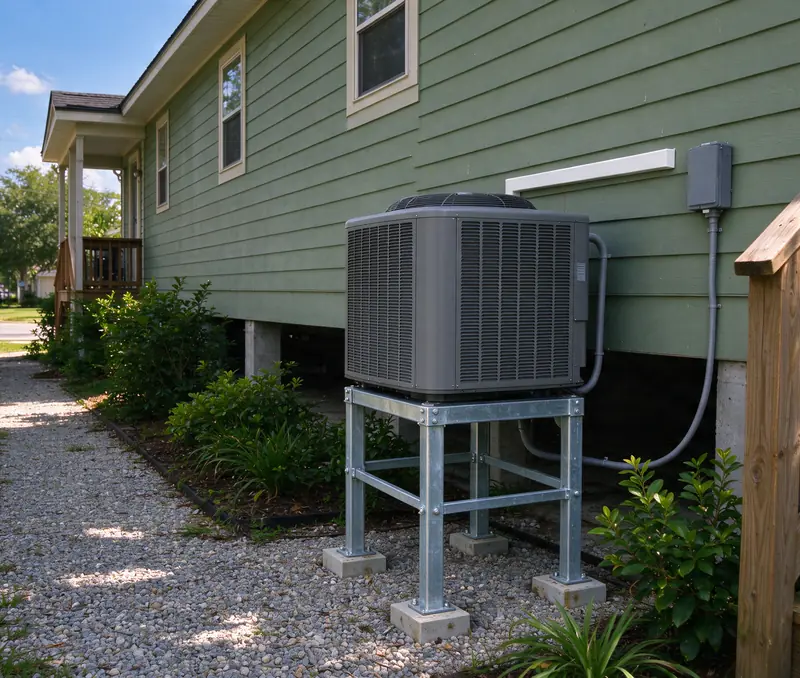
What the New Orleans mechanical permit covers
The City publishes the scope, the fee basis and the extra steps for larger projects.
From the City's mechanical permit page
- Scope. Installing, repairing, replacing or altering mechanical equipment, including air-conditioning systems and electric or gas heaters and furnaces.
- Fee. Based on the type of equipment, the number of connections and how many pieces are installed, so it varies by job.
- Duration. Valid until six months of inactivity.
- Application. Filed online through the City’s One Stop App, with a building permit also needed for some mechanical work.
- Thermostat. Every dwelling with forced-air heating needs at least one programmable thermostat, citing the residential energy code.
New construction and major renovations
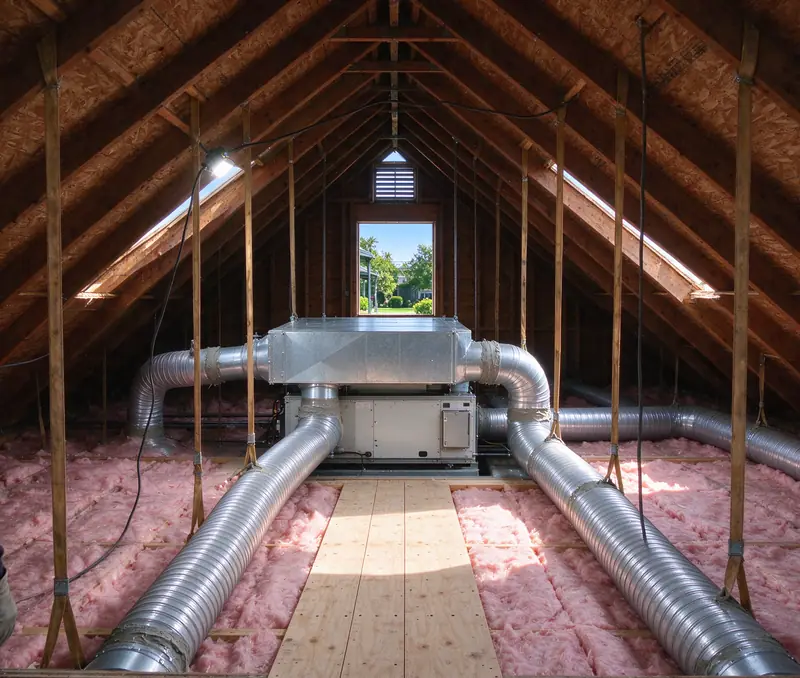
On new construction and substantial renovations, the City asks for ACCA Manual J, S and D worksheets to be completed before the system is installed, verified by affidavit. It also lists duct leakage results, and says duct testing isn’t required when the air handler and every duct sit inside conditioned space. We run the room-by-room calculation on every installation anyway, as our sizing guide explains.
A like-for-like swap still needs the permit
Putting a new unit in the old spot doesn't make it a repair.
What people assume
Same size, same spot, so no permit.
- The old unit had no permit trouble
- Nothing about the house changes
- It's quicker without one
What the City's page says
Replacing equipment needs the mechanical permit.
- Replacement is named alongside installation
- Fees follow the equipment and connections
- The inspection checks the finished work
Treat every replacement as permitted work, and expect the permit step on the estimate.
A permit also protects the record of the house. When you sell, or when an insurer or the next owner asks about the system, a closed permit shows the work was inspected. Our cost guide shows where the permit sits in a price.
Historic districts and the outdoor unit
In a local historic district, the permit isn't the only review the outdoor unit may need.
What the HDLC guidelines favour
The Historic District Landmarks Commission’s guidelines favour ground equipment in the rear yard, or the side yard when the rear isn’t possible, with visible equipment screened. Rooftop units shouldn’t sit where they are visually obtrusive, and wall or roof equipment sits at least 10 feet back from the street wall. The work may need district review before it starts.
Planning around review
A replacement in the existing spot is the simplest case; moving a unit or adding one is where review matters most. Our placement guide covers the options, and the estimate notes when a district step applies.

Where the permit fits in the schedule
The permit comes before the work days; the inspection comes after them.
- The estimate states the permit office, who obtains the permit and when the inspection happens.
- The application goes in once the scope is agreed; equipment is ordered alongside it.
- The work days are booked around the permit, as the installation process guide explains.
- The inspection is booked after the system is running, so the inspector sees the finished work.
- The record of the closed permit stays with the house.
If an electrician runs new circuits, the electrical side may carry its own permit, and our electrical readiness guide covers that work. For a rebate, the program checks the account, not the permit; see the rebate guide.