Last updated:
The front rooms are fine, but the back bedroom never cools. A grille whistles when the system starts. The heat pump runs through the whole afternoon and the house still feels sticky. Those are often duct problems, not equipment failures, and a new unit connected to the same ducts would inherit them.
Sweet Olive repairs and modifies the ductwork behind ducted heat pumps in homes across New Orleans. We measure static pressure at the air handler and airflow at each register, walk every run we can reach in the attic or crawlspace, and then repair the runs, joints and returns that are costing you air. The same measurements, taken again after the work, show what changed.
If you are replacing the heat pump anyway, the duct work belongs in the same plan; our heat pump replacement page covers that. If you are not sure whether the problem is the ducts or the equipment, a heat pump inspection is a good first visit.
What a ductwork repair in Bayou St. John looks like
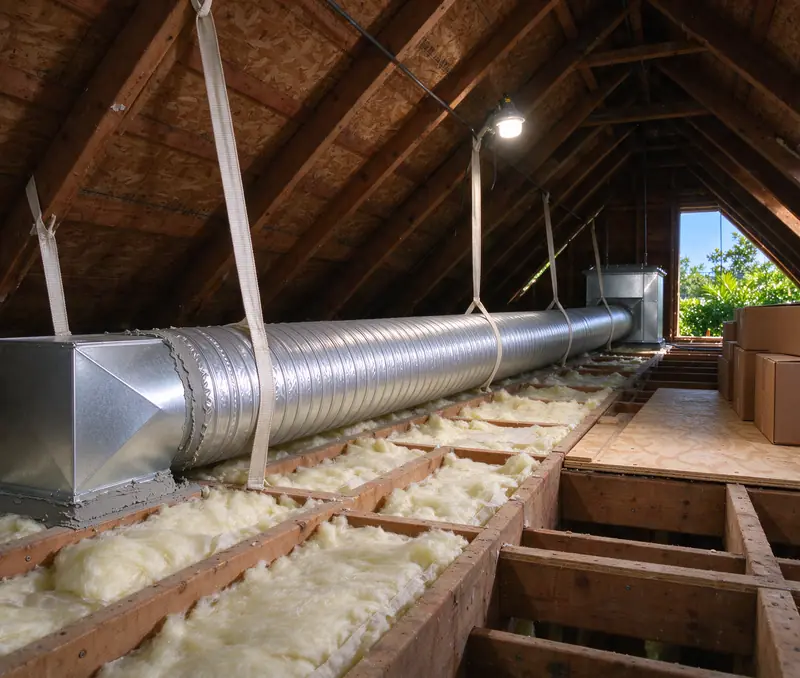
A heat pump that runs all afternoon and two back bedrooms that never catch up: why the fix sits in the attic, not in the equipment.
- Location
- Bayou St. John, New Orleans
- Home
- Raised single-story home, about 1,600 sq ft, three bedrooms
- System
- Existing ducted heat pump with an attic air handler
- Runs replaced
- One 22-foot, 6-inch insulated flex run
- Connections sealed
- Five, with mastic
- Return path
- One jumper duct, back bedroom to hall
- Project price
- $645
- Duration
- 1 working day
The complaint
Two back rooms that never catch up
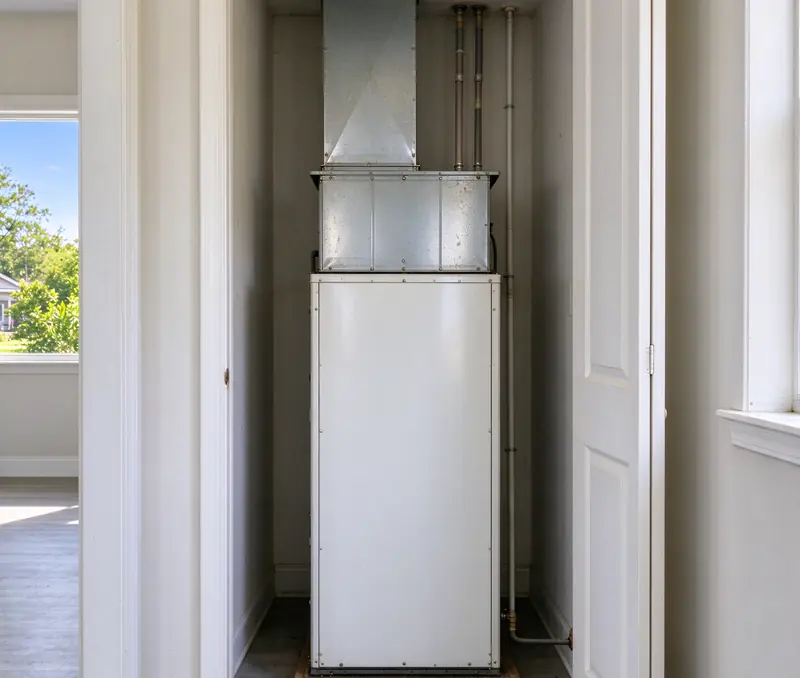
The house is a raised, single-story home near Bayou St. John, about 1,600 square feet with three bedrooms and an attic air handler. The heat pump runs all afternoon, the front rooms are fine, and the two back bedrooms stay warm and stuffy, worst with the doors closed. The return grille in the hall whistles.
The findings
A crushed run and a room with no way back
We measure static pressure at the air handler and compare supply airflow at each register. In the attic, the 6-inch run to one back bedroom is kinked over a joist and flattened under stored boxes, and its boot connection has pulled loose. The other back bedroom has supply air but no path back to the return when its door is shut.
- Dark circle, Air handler: on an attic platform, over a secondary drain pan
- Ochre square, Supply runs: dropping to ceiling registers
- Blue diamond, Central return: in the hall ceiling
- Yellow triangle, Jumper duct: from a closed bedroom to the hall
- Open ring, Line set and drain: along the outside wall
- Dark cross, Outdoor unit: on a raised stand, with its disconnect
The repair
One run, five joints, one jumper
We replace the crushed run with 22 feet of new 6-inch insulated flex, hung on straps along a clear route away from the storage area. We reattach the loose boot and seal it and four other leaking connections at the plenum and branch takeoffs with mastic. A jumper duct with ceiling grilles links the second back bedroom to the hall, so its air can get back to the return with the door closed.
The check
Measured again before we leave
We measure static pressure and register airflow again and write both sets of readings on the record. The equipment stays as it is. The aim is two back bedrooms that get their share of air from the system already in the attic.
Is it the ducts, or the heat pump?
Some symptoms point to the ducts more than the equipment. None proves it on its own, which is why we measure.
Signs the ducts may be the problem
- Uneven rooms. One or two rooms lag while the rest of the house is comfortable.
- Rooms that change with the door. A bedroom is fine with the door open and stuffy with it shut.
- Noise. Whistling grilles, a roaring return or a blower that sounds strained.
- Weak airflow at some registers. Barely a breath at one vent while others blow strongly.
- Long runs, little progress. The system runs for hours on mild days and the house stays humid.
- Dust and attic smells. Air pulled in through leaks in the return brings attic air with it.
When it is the equipment after all
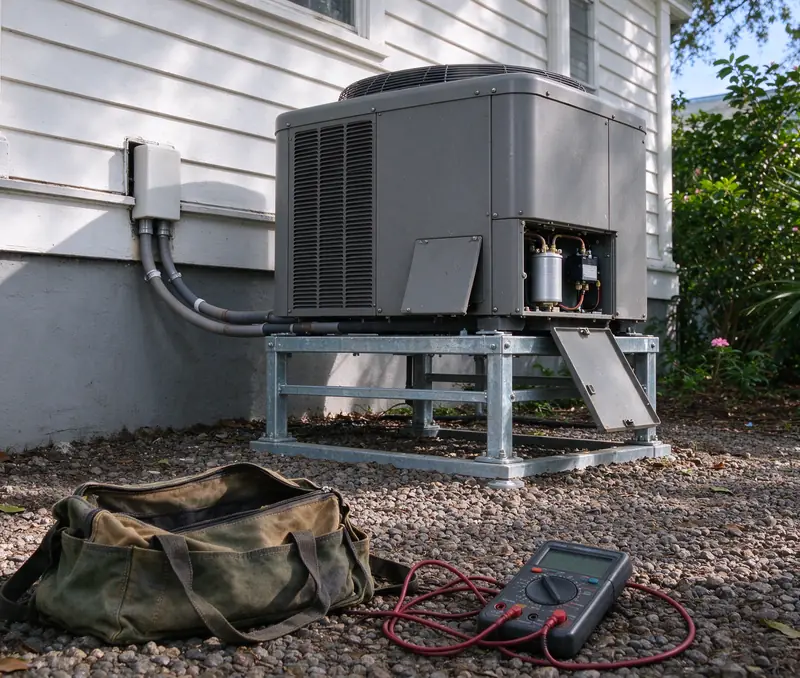
A system that is too large short-cycles and leaves the house damp even with perfect ducts. A failing blower motor or a dirty coil cuts airflow everywhere at once. If every register is weak, we look at the air handler before the ducts; if only some are, the ducts come first. Our heat pump repair page covers the equipment side.
How we find where the air goes missing
Two measurements and a careful walk of the runs tell us most of what we need.
Static pressure
The resistance the blower works against, measured across the air handler and compared with the manufacturer's rated range
High static pressure means the ducts, the filter or the coil are choking the airflow, and the blower can’t move what the heat pump needs.
Room by room airflow
We measure the air coming out of each register and compare the rooms against each other and against what each room needs from its load. A register far below the others points us to that run. Our sizing guide explains how room loads set the airflow each room should get.
Walking the runs
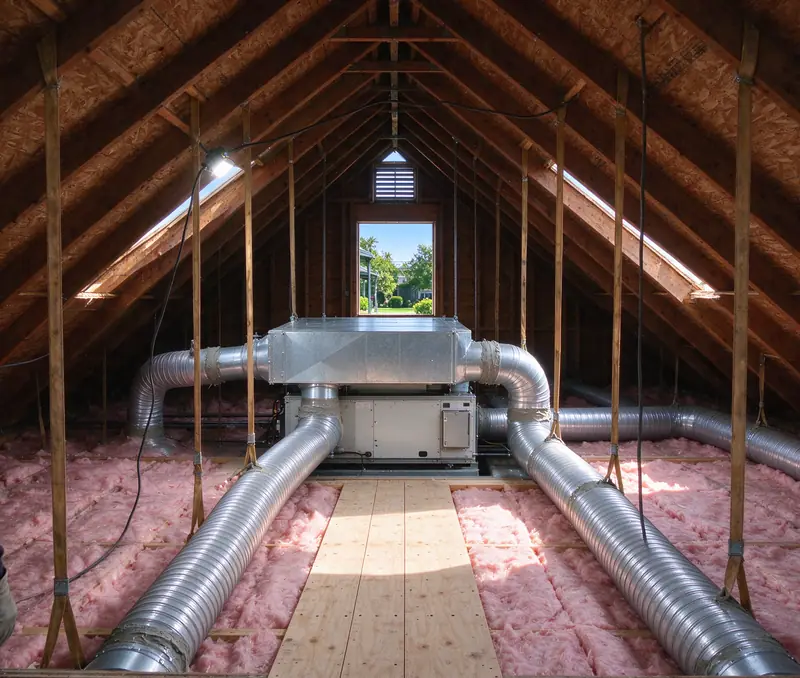
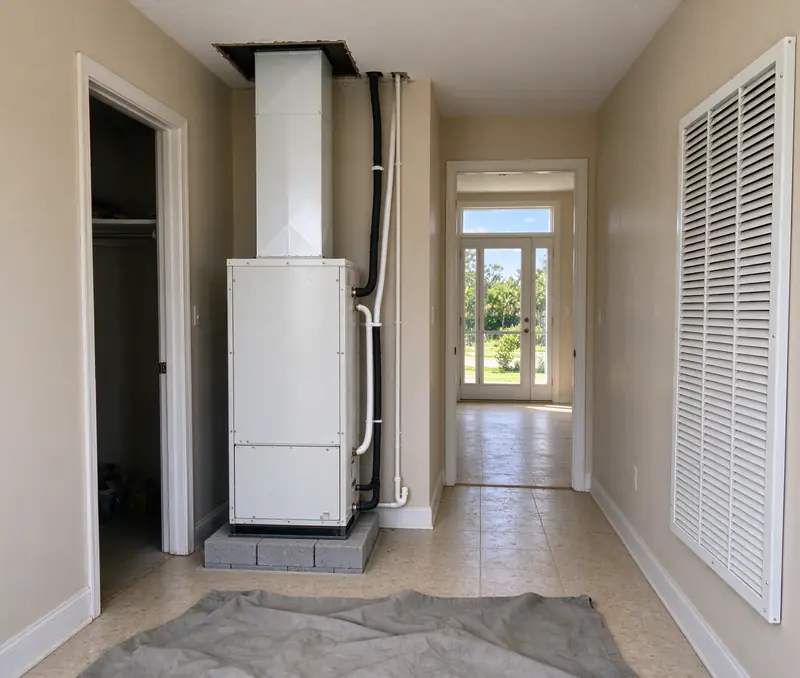
In the attic or crawlspace we follow every run we can reach, from the plenum to the boot at the ceiling. We look for crushed or kinked flex, sags between supports, torn jackets, loose collars, gaps at boots and takeoffs, and insulation that has slipped off. Return leaks matter as much as supply leaks, because they draw hot attic air into the system.
Leakage, where the question needs it
When the visible joints don’t explain the numbers, a duct leakage test pressurizes the system and measures how much air escapes. It tells us whether a few joints or the whole system is leaking. The ductwork guide goes deeper on each test.
Repair, seal, insulate or change the layout
Most duct problems have a specific fix. These are the ones we use.
| Problem | What we do | What it changes |
|---|---|---|
| Crushed or kinked flex run | Replace it with new insulated flex on a clear route | The room gets its air back |
| Loose boot, collar or takeoff | Reattach, clamp and seal with mastic | Air reaches the room instead of the attic |
| Sagging runs | Rehang on straps without kinks | Less resistance, more airflow |
| Damaged insulation | Replace the insulation or the run | Less heat picked up in a hot attic, no sweating ducts |
| Closed room with no way back | Add a jumper duct or transfer grille | The room keeps getting air with the door shut |
| Return too small | Enlarge it or add a second return | Lower static pressure, a quieter system |
| Rooms out of balance | Set or add balancing dampers | Each room gets its share |
Duct problems and how we repair each one.
Why mastic and straps matter
Cloth duct tape fails in attic heat. We seal joints with mastic or foil tape rated for ducts, clamp flex connections first, and hang runs on straps so they don’t sag. Insulated ducts matter here because supply air running through a hot attic, or a crawlspace that stays damp, can pick up heat and sweat on the outside. Our humidity guide explains why.
Air sealing and insulation around the ducts
Duct repair works best when the house around it holds the air. Gaps around ceiling boots and the attic opening let conditioned air escape and attic air in. We seal at the boots we repair and point out larger gaps, and how much they matter to the load, in the estimate.
When repairs aren't enough
Sometimes the tests say the duct system itself, or the equipment, has to change.
Replacing the duct system
If leakage is high throughout, the runs are undersized for the equipment, or the layout never reached the back of the house, repairing joint by joint costs more than it saves. Then we lay out new ducts from the room loads, with a return path from every bedroom, and price them like part of an installation.
Reviewing the equipment
If the ducts test sound and the rooms still lag, the size or the setup of the heat pump may be the issue. A load calculation, a look at the blower settings and the thermostat show whether the equipment fits the house. That review often comes with a replacement estimate when the system is near the end of its life. Ductless mini splits are another kind of system, which we don’t install; our ducted vs ductless guide explains the difference.
What duct repair costs
The price follows the number of runs and joints, and how hard they are to reach.
Sweet Olive's typical range for a residential heat pump repair is $161 to $661. Smaller duct repairs, such as a crushed run, a few loose joints or a jumper duct, are priced as a repair. We set your price after the site visit and write it into your estimate line by line.
What moves a duct repair price
- How many runs and joints. One crushed run costs less than a whole branch.
- Access. Low attic headroom, deep insulation or a tight crawlspace adds labor.
- Added returns. Cutting in a new return grille and its duct takes more time and material than sealing.
- Ceiling work. New grilles mean cutting plaster or drywall, with dust protection below.
- A larger layout change. Moving runs or adding several is priced from the new layout in your estimate.
Duct work with a new system
When duct changes come with a replacement, they are lines in the replacement estimate rather than a separate job. Our cost guide shows how both are priced, and the operating cost guide explains why leaky ducts show up on the bill.