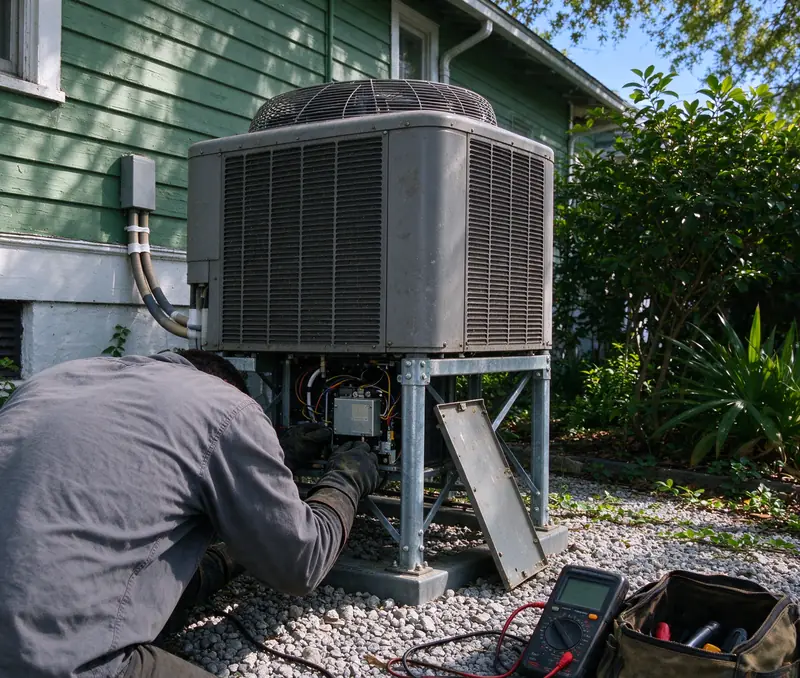
Last updated:
The short answer
A ducted heat pump needs a dedicated circuit for the outdoor unit, circuits for the air handler and its electric heat strip, a disconnect within sight of the outdoor unit, and control wiring for each stage. The nameplates set the wire and breaker sizes, and the panel has to carry the added load. An electrician runs new circuits.
Key takeaways
- The new equipment's nameplates set the circuits; the old breaker label doesn't.
- The heat strip often draws more current than the heat pump itself.
- An open breaker space isn't proof the panel can carry the load.
- A panel or service upgrade, when needed, is its own line in the estimate.
- Leave the panel cover on; a photo of the label is all we need before the visit.
The heat pump you choose sets the electrical work, not the breaker the old system used. A larger strip, a different outdoor unit or a move off gas heat can each change the circuits a house needs, and the panel has to carry all of it.
Sweet Olive installs heat pumps across New Orleans and keeps the electrical work visible in every estimate. This guide covers what the equipment asks of your wiring, how we check the panel, and where an electrician’s work begins. For how the heat strip is sized, see our sizing guide.
What the nameplate tells the electrician
Each indoor and outdoor unit carries a label with the figures its circuit is sized from.
| Nameplate figure | What it means | What it sets |
|---|---|---|
| Voltage and phase | The supply the unit is built for, such as 208/230 volts, single phase | Which circuit type it needs |
| Minimum circuit ampacity | The smallest current the circuit’s conductors must carry | Wire size |
| Maximum overcurrent protection | The largest breaker or fuse allowed | Breaker size |
| Compressor and fan ratings | The current each motor draws | Starting and running load |
| Heat strip kilowatts and circuits | The strip’s size and how many circuits it needs | Air handler circuits and panel load |
The electrical figures on a heat pump's nameplate and what each one sets.
Why the old breaker doesn't settle it
The old system’s breaker was sized for the old system’s nameplate. A new outdoor unit can call for a different wire or breaker, and the air handler’s figures change with the strip size. The circuit has to match the new equipment’s installation instructions and the code that applies to your building. The components guide shows where each unit sits.
The heat strip and the panel
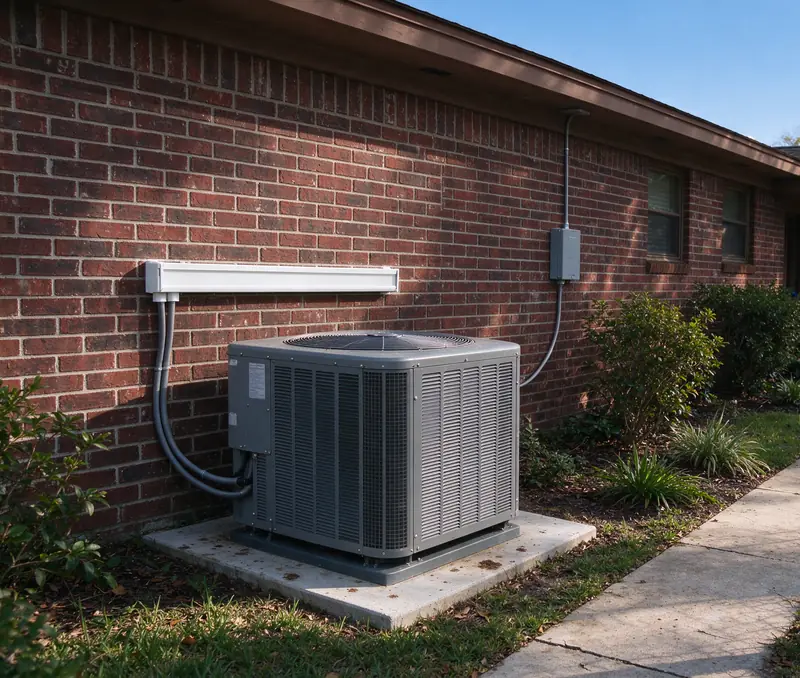
Backup heat is usually the largest electrical load in the system, which makes its size a panel question.
| Heat strip size | Current at 240 volts |
|---|---|
| 5 kW | About 21 amps |
| 8 kW | About 33 amps |
| 10 kW | About 42 amps |
| 15 kW | About 63 amps |
Current drawn by common electric heat strip sizes at 240 volts, from kilowatts divided by volts.
Sized to the heating load, not the cabinet
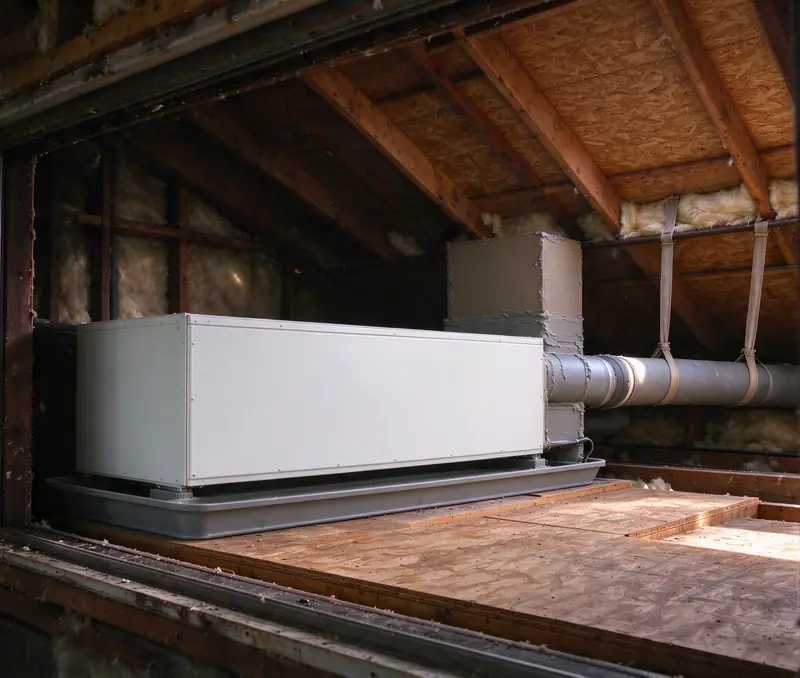
An air handler often accepts several strip sizes. The largest isn’t the safest: it adds load to the panel and runs hotter than the house needs. We size the strip from the heating figure in the load calculation, then check that the panel can carry it with everything else. A heat pump with a sound gas furnace as backup avoids the strip altogether, as our dual-fuel guide explains.
What we check at the panel
- The rating of the panel and the service feeding it.
- Open spaces for the new breakers, including any two-pole breakers the strip needs.
- What is already on it: range, dryer, water heater, pool pump or a car charger.
- Condition: scorched breakers, double-tapped connections or signs of water.
Leave the panel to the electrician
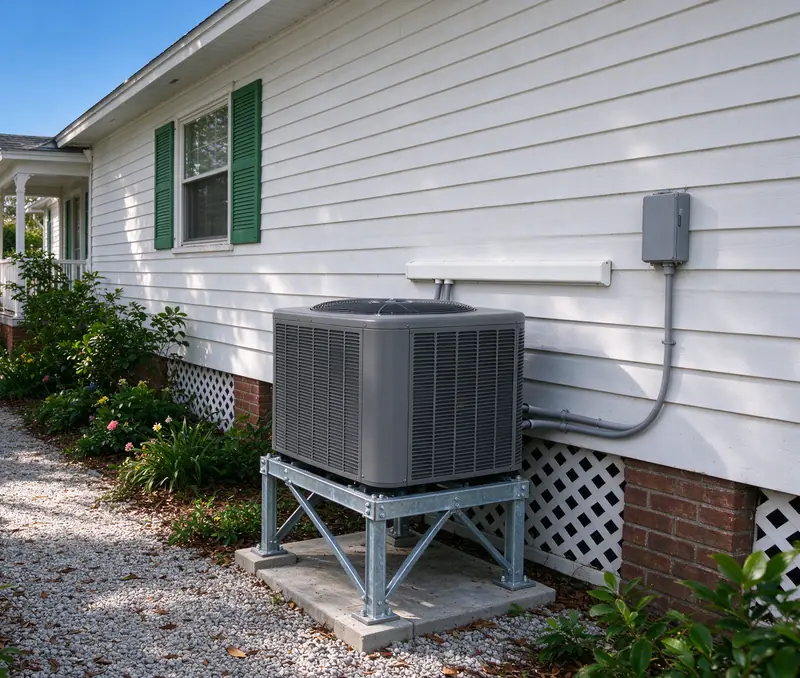
Electrical work on a heat pump installation is planned in the estimate and done by an electrician, not by you.
What to send us instead
Don’t remove the panel cover or test anything live. A photo of the label inside the panel door and a wide photo of the breakers with the door open is enough for us to prepare the visit. We look at the rest in person.
The panel can carry it
New circuits fit the rating and the existing load.
- Circuits and disconnect are lines in the estimate
- An electrician runs them during the work days
- The inspection covers the finished wiring
The panel can't
The load check or condition says it needs work.
- A panel or service upgrade is a separate line
- It may involve the utility and its own permit
- We explain it before you decide on the system
Either way, you see the electrical scope before you commit.
The disconnect, the outdoor side and the controls
Past the panel, three more pieces finish the electrical work.
The outdoor disconnect
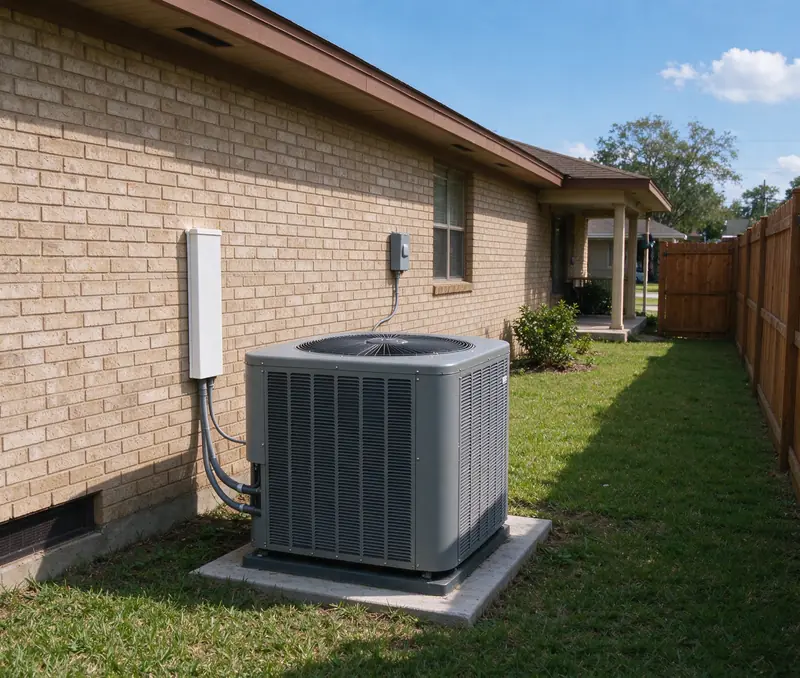
A disconnect within sight of the outdoor unit lets it be shut off safely for service. It sits on the wall or the stand, clear of the coil’s airflow. Where a unit stands on a raised stand because water collects after heavy rain, the disconnect and wiring go up with it. FEMA guidance notes that heating and cooling equipment isn’t designed to withstand flooding, and elevation needs depend on the parcel.
Control wiring
The thermostat cable carries the low-voltage calls for each stage, the reversing valve, the fan and the backup heat. A two-stage or variable-speed system needs more conductors than an old single-stage cable may have, and some systems use their own communicating control. Our thermostat compatibility guide covers the checks.
Moving off gas, and commercial buildings
Two cases add electrical work beyond a straight replacement.
| Situation | What changes electrically | Where to read more |
|---|---|---|
| Gas furnace to an all-electric heat pump | The air handler and heat strip need new circuits that the furnace never used | Furnace to heat pump conversion |
| Gas furnace kept as backup | The furnace keeps its circuit; the heat pump adds the outdoor circuit and controls | Heat pump or gas furnace |
| Commercial building | Voltage and phase can differ, and the scope is set per project | Commercial heat pumps |
Electrical changes in a gas-to-heat-pump conversion and in commercial work.
Whatever the building, the estimate lists the new circuits, the disconnect and any panel work as lines of their own, and the installation process guide shows when the electrical work happens.