Last updated:
The heat pump in your Gretna house is getting tired, and its outdoor unit sits right beside the front porch where everyone walking past can see it. Replacing it is overdue. The question is whether to put the new one in the same spot or somewhere better, and what the city needs to see first.
Sweet Olive replaces and installs ducted air-source heat pumps in Gretna and across our service area. Gretna has its own city government, so permits go to the City of Gretna Building Department, not the parish, and older streets fall under historic district review. On the first visit we look at the air handler, the ducts, the panel and the lot, including how the outdoor unit looks from the sidewalk. Your written estimate names the equipment, any relocation and the city’s review and permit steps.
If the system still runs and you want to know what it has left, an inspection comes first. The replacement page covers the decision in full, and new installation covers houses with no central system yet.
A typical Old Gretna heat pump replacement
A worn system with its outdoor unit in plain view from the street, a historic district and a narrow lot: why this replacement moves the unit to the back.
- Location
- Old Gretna, Gretna
- Home
- Single-story frame house on a narrow lot, about 1,400 sq ft, two bedrooms
- System
- Nominal 2.5-ton two-stage matched system
- Outdoor unit
- Moved from the front side yard to a new rear pad
- Line set
- 45 feet, new, in a painted cover along the side wall
- Access
- 36-inch side gate, utility-closet air handler
- Project price
- $9,050
- Duration
- 3 working days
The setting
A unit the whole street can see
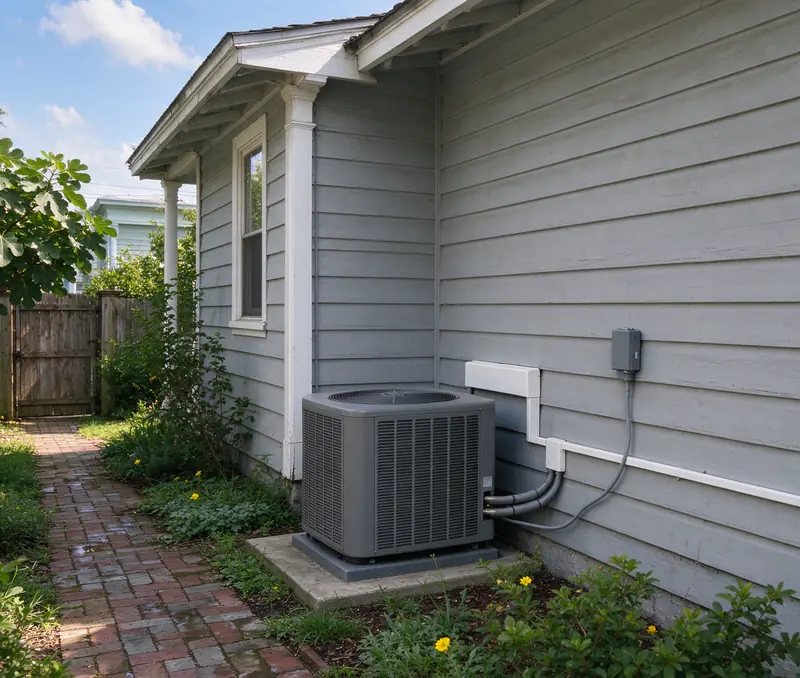
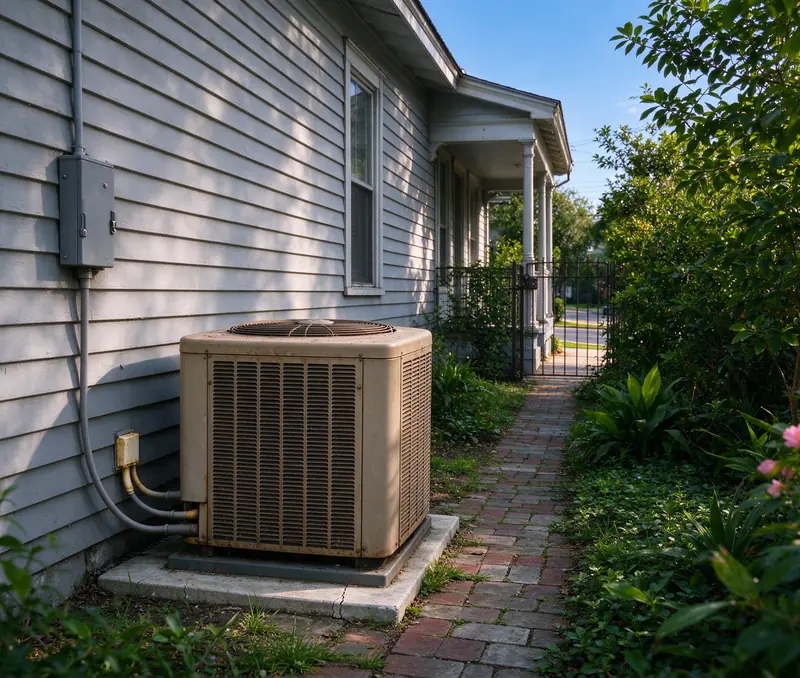
The house sits on a narrow lot in Old Gretna, inside the city's historic district. The heat pump is worn, its compressor loud on starts, and its outdoor unit stands in the side yard beside the front porch, in full view of the sidewalk. The air handler lives in an interior utility closet, and the only way to the back is a 36-inch gate.
The decision
Same closet, new spot outside
Replacing the outdoor unit where it stands is the shorter and cheaper route. The owner chooses the rear yard instead. Because that changes what the street sees, the plan goes to Gretna's Historic District Commission for a Certificate of Appropriateness before the Building Department permit is filed. The load calculation supports a nominal two-and-a-half-ton, two-stage system, and the closet ducts pass their test.
The work
A longer line set, kept tidy
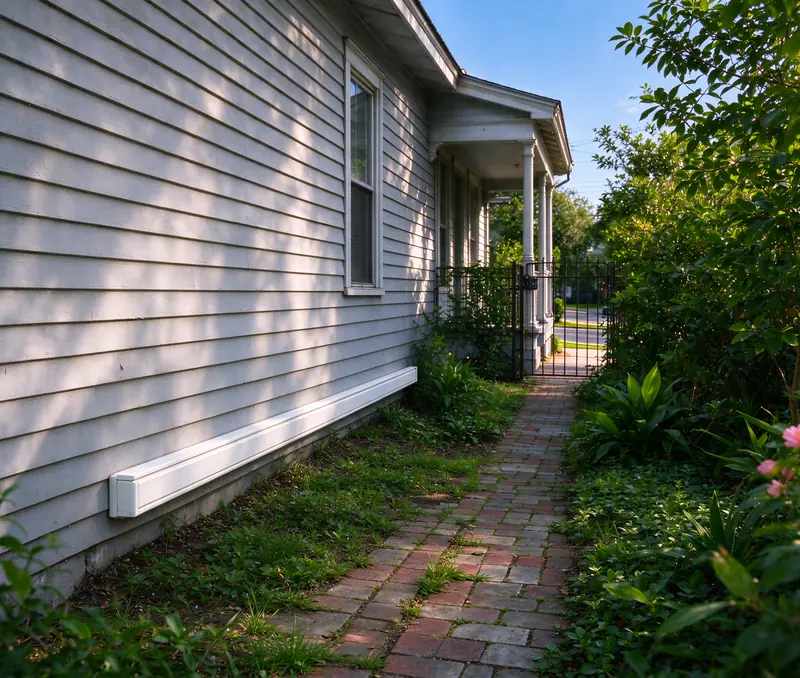
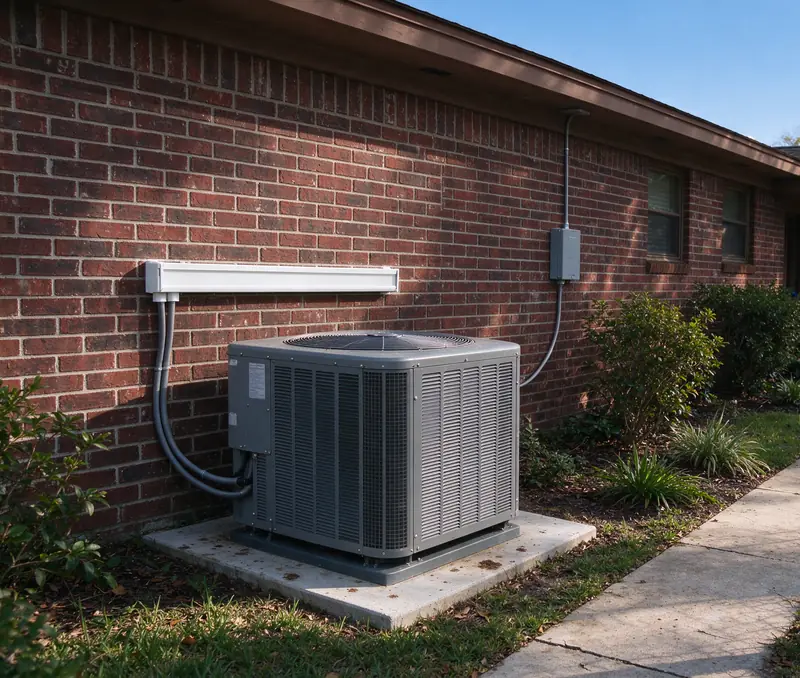
Day one recovers the refrigerant, removes both old units through the gate and sets a new pad at the rear with the manufacturer's clearances. Day two sets the air handler and outdoor unit and runs a new 45-foot line set along the side wall inside a painted cover. Day three brazes under nitrogen, pressure-tests and evacuates, then patches the old wall opening and takes up the front pad.
The handover
A quieter front yard
We set the charge for the longer line, measure airflow and static pressure, test the drain and walk the owner through the thermostat. The readings stay with the house and the city inspection follows. The intended result is a system sized to the house, with nothing mechanical left in view of the street.
Gretna's Building Department, not the parish
A Gretna address has its own permit office, its own portal and, on some streets, a review before the permit.
Permits through the city portal
The City of Gretna Building Department handles permits and inspections for installing, altering, repairing or replacing mechanical systems, and most filings start in the city’s online permit portal. The city also asks that outdoor equipment such as air conditioning units meet its zoning and development codes. Your estimate states who obtains the permit, and our permit guide compares Gretna with the offices around it.
Historic district review first
In Gretna’s historic districts, exterior changes visible from the street need Historic District Commission review and a Certificate of Appropriateness before the building permit. Moving an outdoor unit, adding a stand or running a line set up a front-facing wall can all count. We raise it at the first visit, so the review sits at the start of the timeline instead of holding up work days.
| Where the house is | Permit office | Extra step to check |
|---|---|---|
| Old Gretna and McDonoghville historic districts | City of Gretna Building Department | Historic District Commission review for changes visible from the street |
| Elsewhere in Gretna | City of Gretna Building Department | Zoning rules for outdoor equipment |
| Terrytown and Harvey | Jefferson Parish | None from the city |
| Algiers, across the city line | City of New Orleans | Its own historic district rules where they apply |
Which office usually applies around Gretna; we confirm the line for each address.
Old streets, narrow lots and where the unit goes
Gretna's oldest neighborhoods were laid out long before anyone planned for an outdoor unit.
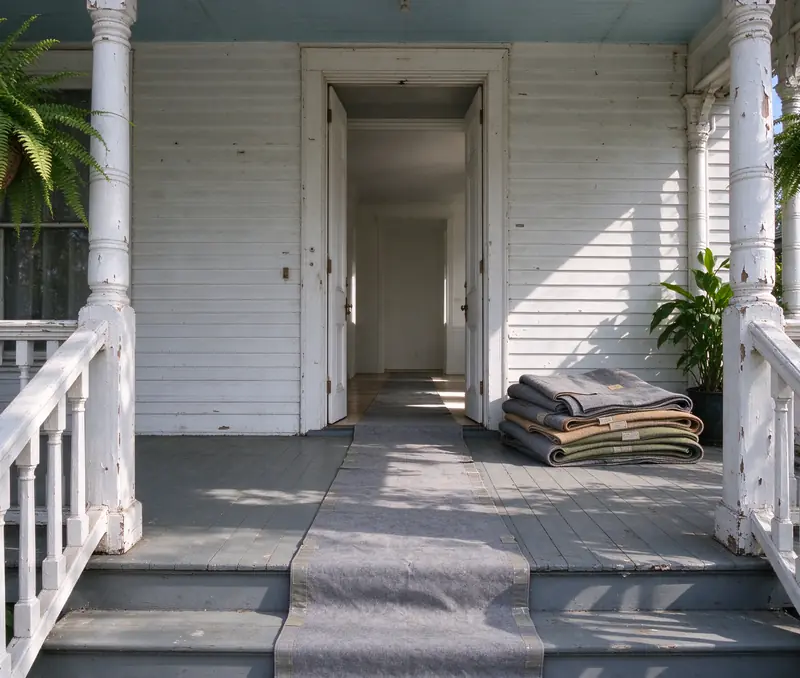
Old Gretna
The Mechanikham-Gretna Historic District grew from a two-block-wide plan of 1836, centred on what is now Huey P. Long Avenue, with lots that run deep and narrow. On those lots the side yard is often the only route to the back, so the gate width decides which outdoor cabinet fits, and the line set has to travel the length of the house. We measure both before choosing equipment, and the placement guide shows the trade-offs.
McDonoghville
McDonoghville’s historic district is known for modest houses set back on sizeable lots. There is usually more room for a rear-yard spot and a shorter line-set route, but the same review applies to anything the street can see.
What we check at a Gretna visit
- The view from the sidewalk. What the street sees now, and what a new spot would change.
- The gate and the side yard. Width, fence, clearances and the route for the line set.
- The closet or attic. Room for the air handler and a secondary pan above any ceiling.
- The ducts. Leakage, static pressure and a return path from every bedroom.
- The panel. Its rating, open spaces and the circuit the old system used.
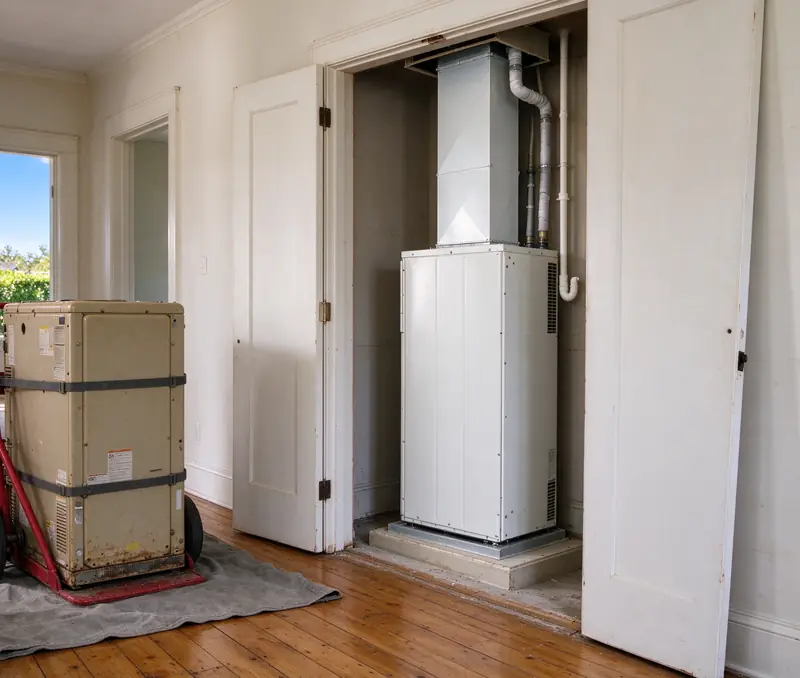
Behind the levee: water and the outdoor unit
Gretna sits low behind the Mississippi River levee, and drainage after heavy rain is a known city concern.
What the city keeps on file
Gretna has a flood hazard mitigation plan and a stormwater master plan, and it posts its current flood maps along with elevation certificates on file for public reference. Where your house has a certificate, we read it with the yard in mind. Heating and cooling equipment isn’t built to sit in floodwater, so the pad or stand height comes from the parcel’s requirement and from where water actually collects, not from a rule of thumb.
Height and looks together
On a historic street, a taller stand is also more visible. We plan the height and the screening together, so the review and the flood check point the same way.
What a Gretna replacement costs
Being in Gretna doesn't change our range; moving the unit or the ducts can.
Sweet Olive's typical range for a residential ducted heat pump replacement is $4,250 to $11,750. We set your price after the site visit and write it into your estimate line by line, including any relocation and the Gretna review and permit steps.
Moving the outdoor unit adds a longer line set, a new pad or stand, and patching where the old line left the wall. Sound ducts stay and get resealed where needed; failing runs become a ductwork repair line. The repair or replace guide helps if you aren’t sure the system is done, and the cost guide breaks a price into its parts.