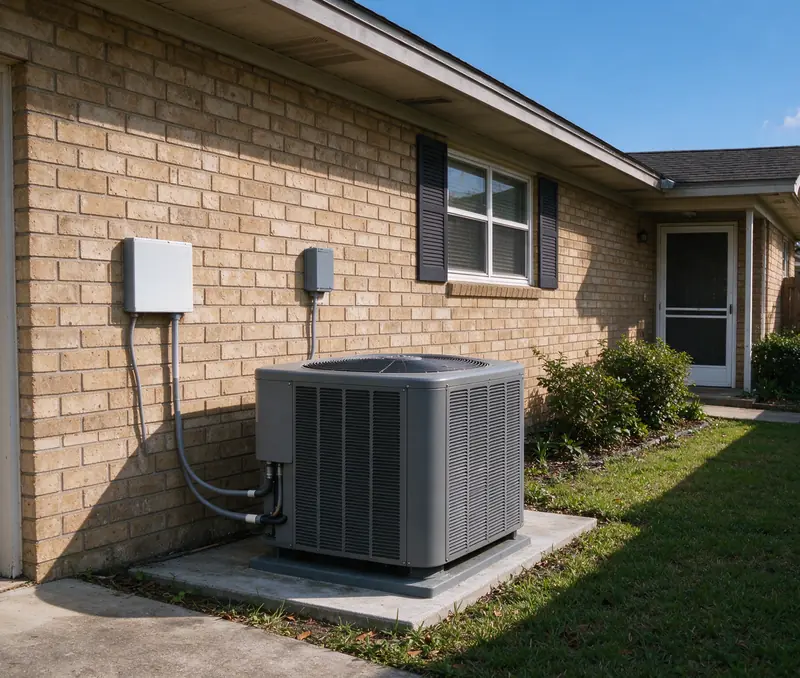
Last updated:
The house cools down fast, the system shuts off, and twenty minutes later the rooms feel sticky again. Now the old heat pump is wearing out too, and you don’t want to buy the same problem twice.
Sweet Olive installs and replaces ducted air-source heat pumps in Harvey and across our service area. In Harvey the permit goes to Jefferson Parish, and the bigger question is usually size: a unit matched to the old nameplate can repeat the same short, damp cycles. So on the first visit we measure the rooms, check where the air handler draws its return and test the ducts. Your written estimate names the equipment, its capacity, any sealing and the parish permit steps.
If the system still has years left, a repair or an inspection may be the right first step. When it is done, the replacement page covers the decision in full.
What a humidity-first replacement in Harvey looks like
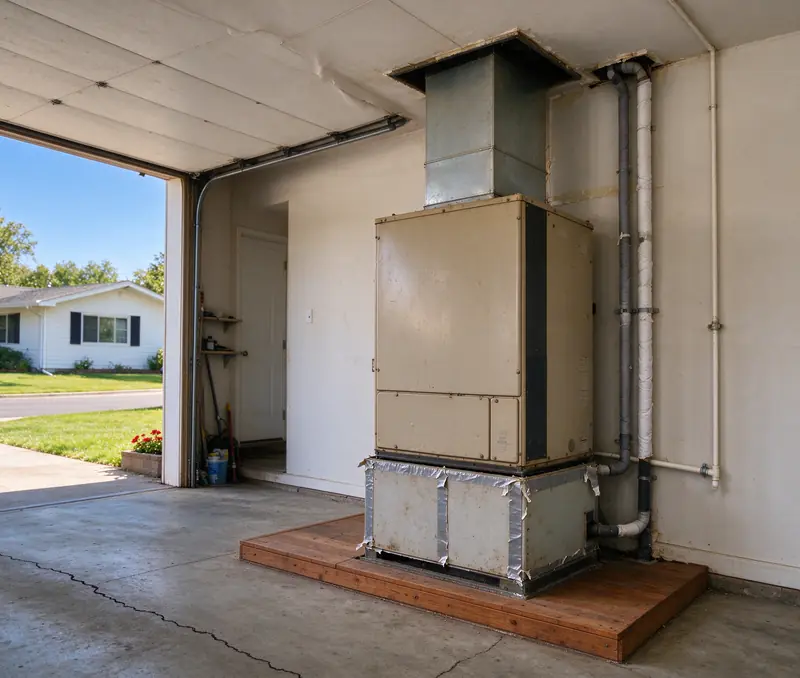
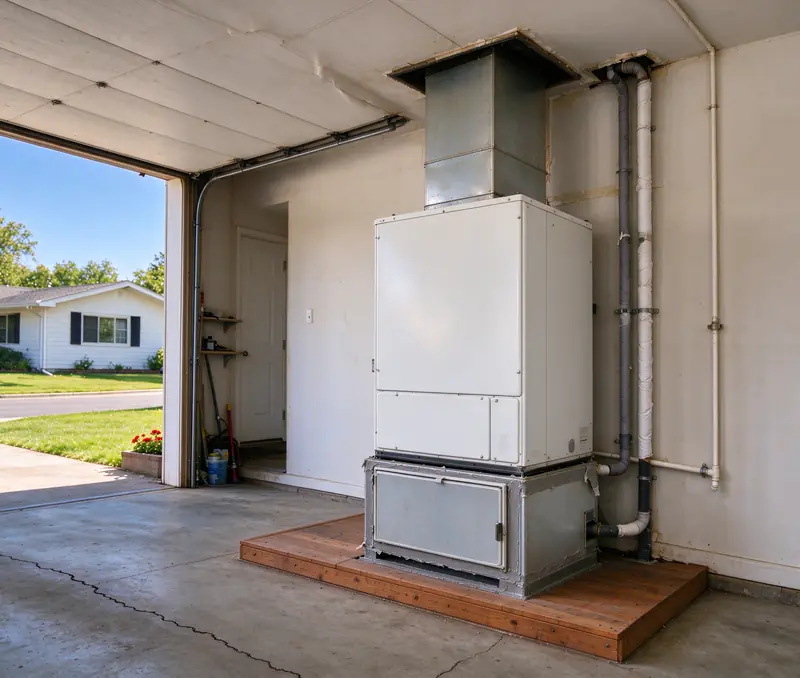
A big system that cools fast, a house that still feels clammy and an air handler in the garage: why this Harvey replacement goes smaller and seals the return.
- Location
- Harvey, off Manhattan Boulevard
- Home
- Single-story slab house with an attached garage, about 1,600 sq ft, three bedrooms
- System
- Nominal 2.5-ton variable-capacity matched system, down from a 4-ton nameplate
- Old system
- 4-ton single-stage, short cycling
- Air handler
- Garage platform; return plenum rebuilt and sealed
- Line set
- 20 feet, new, sized to the new equipment
- Project price
- $9,850
- Duration
- 2 working days
The problem
Cold air, damp rooms
The house is a single-story slab home off Manhattan Boulevard in Harvey, about 1,600 square feet with three bedrooms. Its four-ton heat pump is wearing out, and even in good years it ran in short, loud bursts: the thermostat hit 74 and the rooms still felt clammy, with a musty smell in the closets. The air handler stands on a platform in the attached garage.
The finding
Too big, and breathing garage air
The room-by-room load calculation supports a nominal two-and-a-half-ton system, well under the old nameplate, which explains the short runs. The supply ducts test sound, but the return plenum beside the air handler leaks at every seam and pulls warm, damp garage air into the system. Matching the old size is the cheaper option, and a standalone dehumidifier is another; neither fixes why the house stays damp.
The work
Smaller equipment, a sealed return
We choose a variable-capacity system that runs long and slow on muggy days. Day one recovers the refrigerant, removes both old units and rebuilds the return plenum in sheet metal with every seam sealed in mastic and a gasketed filter door, then sets the new air handler on the platform with a float switch on its drain. Day two sets the outdoor unit and runs a new 20-foot line set sized to the new equipment, brazed under nitrogen, pressure-tested and evacuated.
The handover
Blower set for moisture, not just cold
We weigh in the charge, measure airflow and static pressure, and set the blower and thermostat so the system removes moisture at low speed instead of racing to the setpoint. The readings stay with the owner, and the Jefferson Parish inspection follows. The aim is a house that feels dry at the temperature it is set to.
Cold air but damp rooms: is it the size?
A system that cools fast isn't always a system that dries the air.
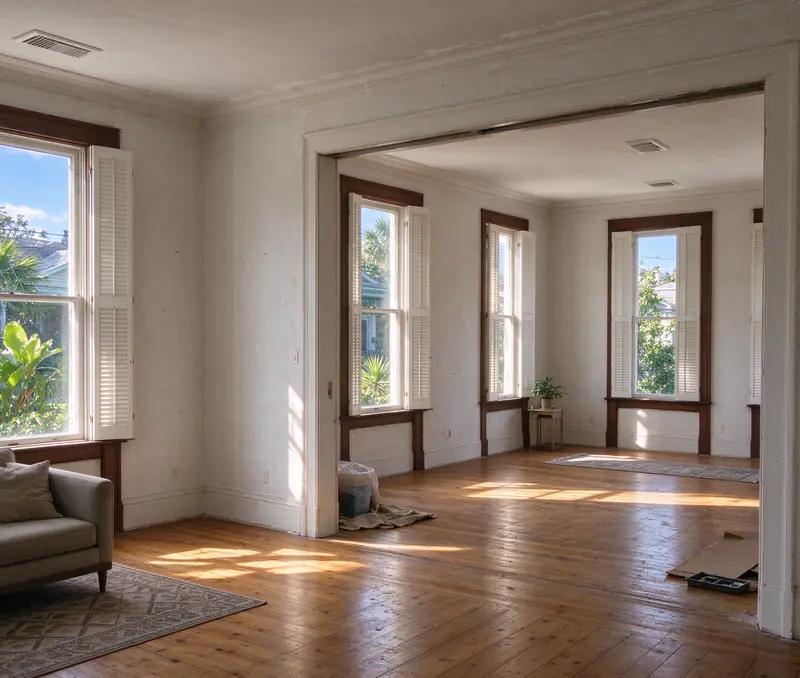
Short cycles leave water behind
A heat pump dries the air while its indoor coil stays cold and wet long enough for water to drip off. Oversized equipment hits the thermostat setting in a few minutes and shuts off before that happens, so the house reaches 74 and still feels clammy. We run a room-by-room load calculation (ACCA Manual J) and size from it, because matching the old nameplate only repeats whatever sizing the house got last time. Our sizing guide explains the method.
Damp has more than one cause
Leaky return ducts, a blower set too fast for a humid climate or a low refrigerant charge can each leave the air wet, even on a correctly sized system. We measure before naming a cause, and the humidity guide walks through the signs.
Single-stage
Runs at full output or not at all.
- Lower equipment cost
- Works with simpler thermostats
- Needs close sizing to dry the air
Variable-capacity
Runs low most of the time and steps up on the hottest afternoons.
- Long, slow runs that remove more moisture
- Higher equipment cost
- Needs a matching thermostat
In a house that has always felt damp, the longer runs of variable-capacity equipment are often worth pricing next to single-stage.
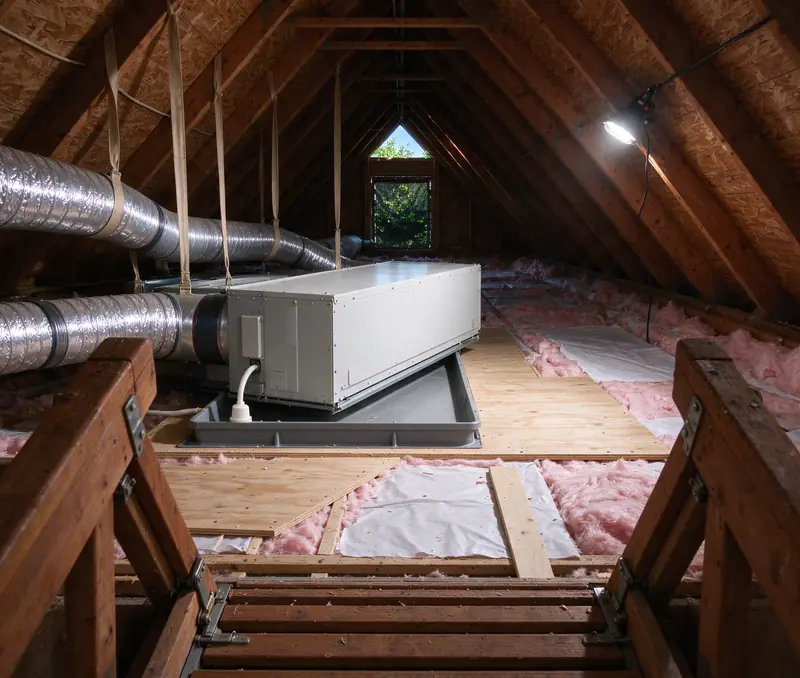
Air handlers in garages, closets and attics
Where the indoor unit sits changes what we check on the first visit.
In the garage
An air handler on a garage platform works well if its return draws only from the house. Where the return plenum or filter door leaks, the system pulls in garage air with its heat, moisture and dust. We check every seam and price sealing or a rebuilt plenum as its own line.
In a closet or the attic
A hall closet keeps the unit inside the cooled space, with the return beside it. An attic unit above a finished ceiling gets a secondary drain pan and a float switch, so a blocked drain shuts the system off instead of staining the ceiling. Either way, the ducts are tested for leakage and static pressure before we plan to reuse them; failing runs go into a ductwork repair line.
Permits and where Harvey sits
Harvey is unincorporated, between the City of Gretna and Marrero.
A parish filing
Harvey has no city government of its own, so heating and cooling equipment is filed with the Jefferson Parish Building Regulatory Division before the work, and an inspection follows. Gretna to the east runs its own Building Department, so an address close to that line gets checked first. Marrero to the west and Woodmere to the southwest stay with the parish. The permit guide compares the offices. We also confirm which electric utility serves your account, since that decides which rebate programs could apply; the rebate guide explains why.
Water around the outdoor pad
Heavy summer rain can stand in West Bank yards for a while. Heating and cooling equipment isn’t built to sit in water, so we look at where it collects on your lot and check the parcel’s requirement before keeping the old pad or choosing a stand.
What a Harvey replacement costs
Capacity, equipment tier and the return usually decide where a Harvey house lands.
Sweet Olive's typical range for a residential ducted heat pump replacement is $4,250 to $11,750. We set your price after the site visit and write it into your estimate line by line, including the Jefferson Parish permit steps for your address.
What moves a Harvey price
- Capacity and tier. Single-stage, two-stage or variable-capacity, sized from the load calculation.
- The return and ducts. Sealing a plenum, rebuilding one, or repairing failing runs.
- Electrical work. Reusing a sound circuit or adding one, with a panel upgrade as a separate line.
- Controls. A thermostat that matches the equipment and its humidity setting.
- The outdoor spot. Line-set length, and a pad or stand on low ground.
The cost guide breaks a price into its parts, and the stage comparison explains what the extra cost of variable capacity buys.