Last updated:
The furnace in your hall closet still lights, but the condenser outside is giving up, and you’re tired of running two appliances on two bills. Replace the condenser and keep the gas, or move the whole house to one heat pump?
Sweet Olive installs ducted air-source heat pumps in homes across Woodmere and the rest of our service area. Woodmere is unincorporated, so the filing goes to Jefferson Parish. On the first visit we look at the furnace closet, test the attic ducts, check the panel and walk the back yard where the outdoor unit sits. Your written estimate names the equipment, the gas-line and electrical work, the duct work and the parish permit steps.
A furnace switch is a heat pump conversion. If the house already has a heat pump that is failing, our replacement page covers that decision, and a house with no central system starts with new installation.
Inside a Woodmere gas-to-heat-pump switch
A gas furnace in the hall closet, a condenser near the end and a Jefferson Parish filing: how one Woodmere house moves to a single system for heating and cooling.
- Location
- Woodmere, Jefferson Parish
- Home
- Single-story slab home, about 1,500 sq ft, three bedrooms
- System
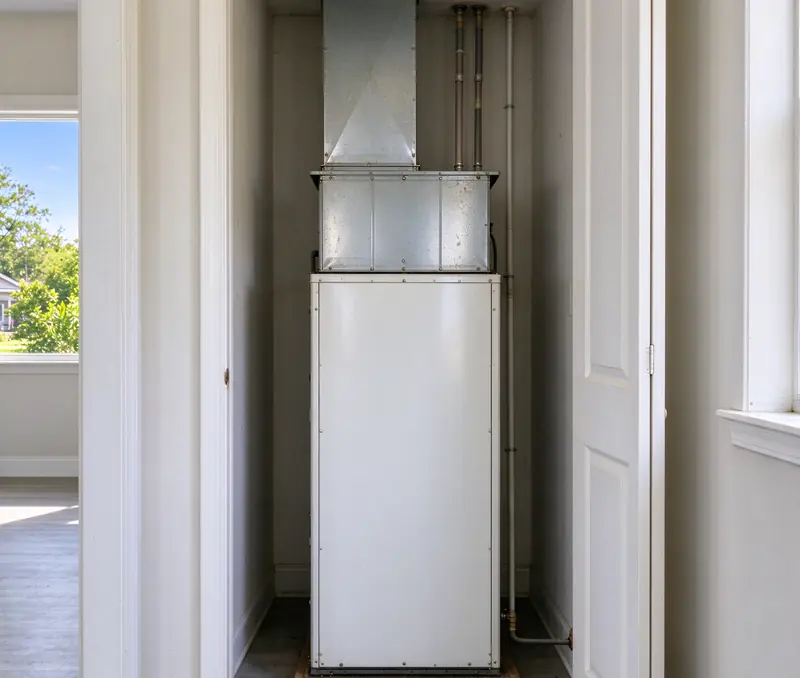
- Nominal 2.5-ton two-stage heat pump with electric backup heat
- Old system
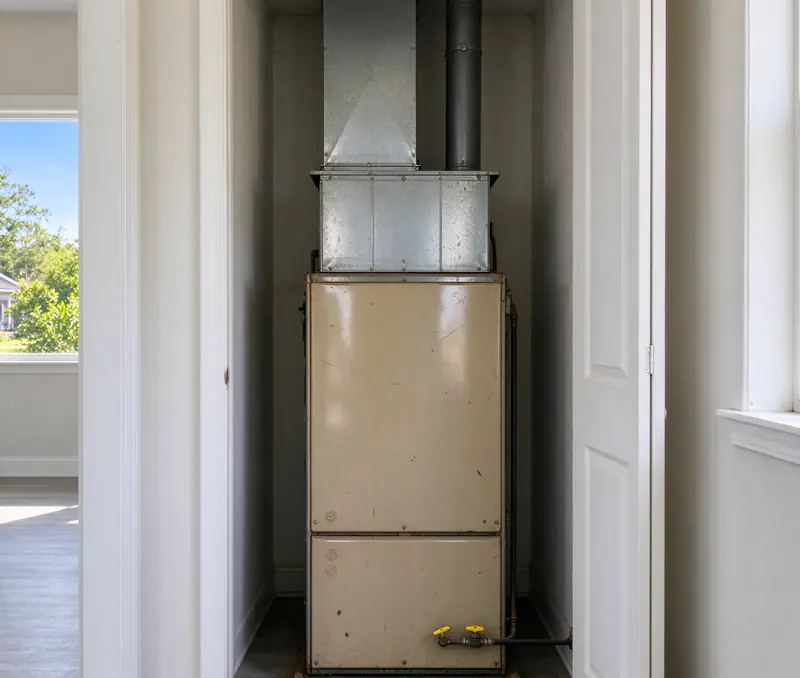
- Gas furnace and cooling coil in the hall closet
- Gas line
- Capped at the closet by a plumber
- Electrical
- New 240-volt circuit for the air handler
- Ducts
- Tested and kept; return filter grille replaced
- Project price
- $9,400
- Duration
- 2 working days
The setting
A furnace closet and a tired outdoor unit
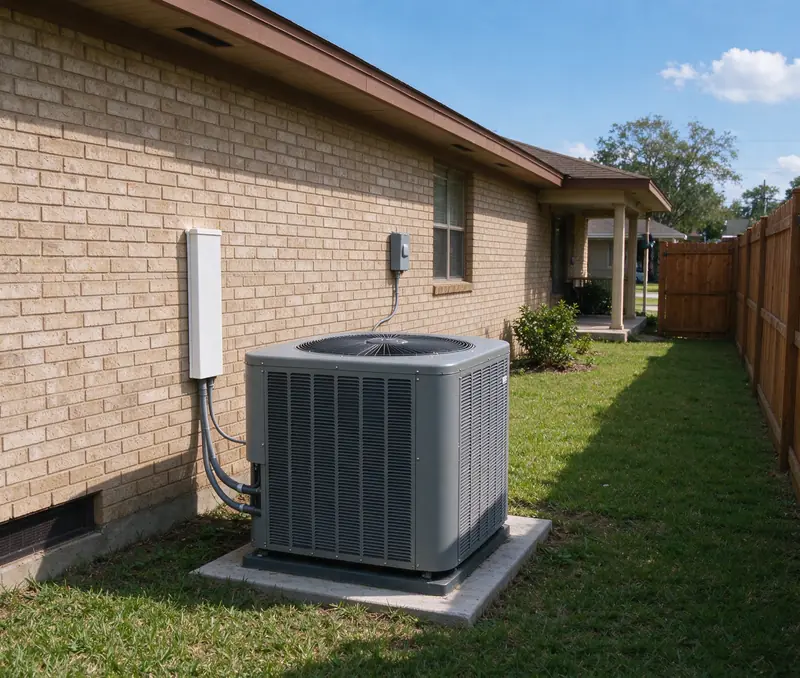
The house is a single-story slab home in Woodmere, about 1,500 square feet with three bedrooms. A gas furnace with a cooling coil sits in the hall closet, and the outdoor condenser out back is struggling through its summers. The owners want one system that both cools and heats. Woodmere is unincorporated, so the switch is filed with Jefferson Parish before the work.
The decision
Swap the furnace, keep the ducts
The load calculation supports a nominal two-and-a-half-ton, two-stage heat pump with a small electric heat strip for the coldest mornings. The attic ducts pass the leakage and static pressure tests, so they stay. A dual-fuel setup that kept the furnace was the alternative; the owners would rather retire the gas appliance and its flue.
The work
Gas capped, new circuit, new closet
Day one protects the hall floor, recovers the old refrigerant and takes out the furnace, coil and condenser. A plumber caps the gas line at the closet and the flue opening is closed off. An electrician runs a new 240-volt circuit for the air handler, which the old furnace never needed. Day two runs a new 20-foot line set, brazed under nitrogen, pressure-tested and evacuated to a micron reading.
The handover
One thermostat for both seasons
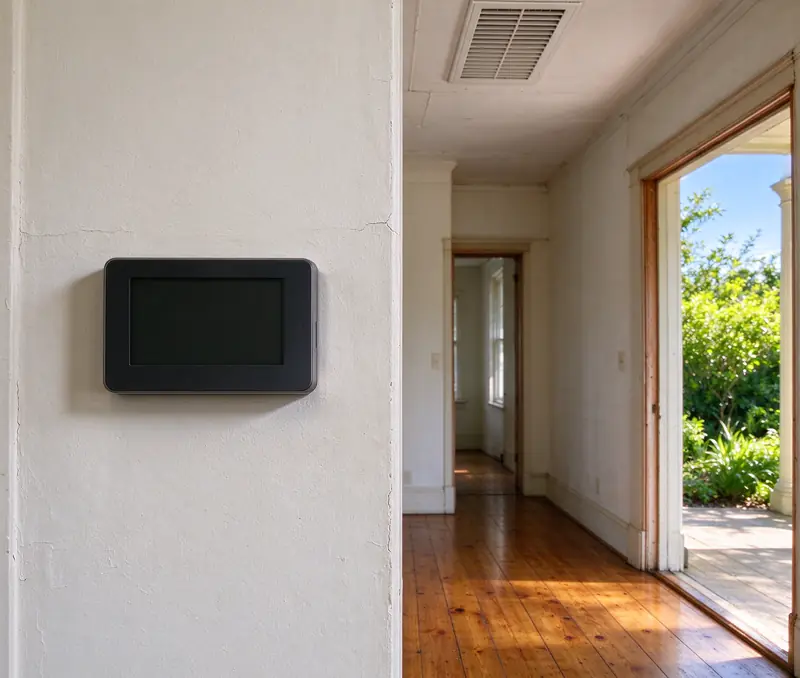
We set the thermostat for two stages and the heat strip, test the drain and float switch, and measure airflow at the new return grille. The readings stay with you and the parish inspection follows. The aim is a house heated and cooled by one sized system, with no gas appliance left in the closet.
Gas furnace or heat pump: which way should you go?
Two good answers, depending on how you want the house heated.
All-electric heat pump
The furnace comes out and the heat pump heats and cools, with a small electric strip for the coldest mornings.
- One appliance and one thermostat
- No flue or gas connection in the closet
- Needs a 240-volt circuit for the air handler
Dual fuel
A heat pump replaces the condenser and the furnace stays as the backup heat on cold mornings.
- Keeps the gas furnace and its venting
- Heat pump does most of the winter
- Furnace and heat pump both need upkeep
If the furnace is old too, the all-electric switch usually makes more sense; if it is newer, dual fuel keeps it working.
What changes in the closet
A furnace closet holds a burner, a flue and a gas connection. After the switch it holds an air handler with a heat strip, a filter rack and a condensate drain. The ducts usually stay where they are, which is why we test them for leakage and static pressure before we plan to reuse them. Our guides compare a heat pump with a gas furnace and explain dual-fuel systems.
Where the Woodmere permit goes
The Harvey Canal and the Plaquemines line both sit close by.
Woodmere has no city government of its own. Replacing or installing heating and cooling equipment here is filed with the Jefferson Parish Building Regulatory Division before the work starts, and an inspection follows. The permit guide covers what the filing asks for.
The neighbours are a mix. Harvey lies across the Harvey Canal to the northeast and Estelle to the southwest, both also unincorporated Jefferson Parish. At Woodmere’s southeast corner the map changes parish: Belle Chasse belongs to Plaquemines Parish, which keeps its own permits department.
| Where the house is | Permit office |
|---|---|
| Woodmere | Jefferson Parish Building Regulatory Division |
| Harvey, across the Harvey Canal | Jefferson Parish |
| Estelle, to the southwest | Jefferson Parish |
| Belle Chasse, past the southeast corner | Plaquemines Parish |
Which permit office usually applies around Woodmere; we confirm it for each address.
The wiring, the pad and the back yard
Three things a furnace never asked of the house.
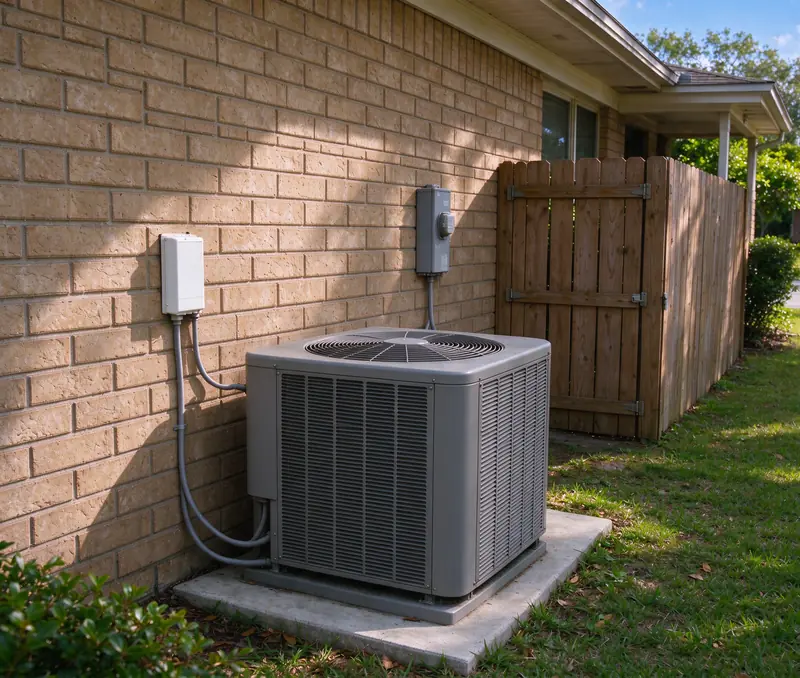
A new circuit for the air handler
A gas furnace runs its blower on a small 120-volt circuit. An air handler with a heat strip needs a 240-volt circuit sized for that strip, so an electrician adds it, and we check the panel for an open space on the first visit. If the panel is full, an upgrade is a separate line. The electrical readiness guide explains the checks.
Water around the pad
The outdoor unit usually goes back on the existing pad, if it is level and sits above where water collects after a heavy storm. Heating and cooling equipment isn’t built to sit in floodwater, and the parish floodplain rules for the parcel decide whether a higher stand is needed.
What a Woodmere switch or replacement costs
The range is the same as across the river; the closet and the wiring move your figure.
Sweet Olive's typical range for a residential ducted heat pump replacement is $4,250 to $11,750. We set your price after the site visit and write it into your estimate line by line, with the gas-line, electrical and parish permit work shown separately.
What moves a Woodmere price
- The heating choice. All-electric with a heat strip, or dual fuel with the furnace kept.
- Gas and flue. Capping the line and closing the flue opening, when the furnace leaves.
- Electrical. A new 240-volt circuit, or a panel upgrade as its own line.
- Ducts. Resealing a few joints, or replacing runs that fail the test.
- Equipment. Capacity from the load calculation, single-stage or two-stage.
Woodmere homes are generally on Entergy Louisiana accounts, and the Energy Smart rebate belongs to Entergy New Orleans accounts, so we confirm your account before counting any incentive. Read how a heat pump copes on the coldest mornings, or start a budget with the cost guide.