Last updated:
Maybe the heat pump came with a house you just bought, and nobody can tell you when it was last serviced. Maybe it has run for years and you want to know whether to budget for a replacement. Or a storm sent water across the yard and you’re not sure the system should be switched back on. None of those is a repair request yet. You want to know where the system stands.
Sweet Olive inspects ducted heat pumps in homes across New Orleans. We read both nameplates, look at the equipment, the drain and the duct runs we can reach, then run the system in cooling and in heat while we measure it. You get written findings, in order of importance, that separate what we measured from what we can’t yet know.
An inspection isn’t a maintenance visit: we don’t clean or service the system unless you ask. It isn’t a repair call either, though it often shows whether one is needed.
Inside a Carrollton heat pump inspection
A newly bought house, a system with no paperwork and a musty hall: what an inspection checks before anyone talks about replacing it.
- Location
- Carrollton, New Orleans
- Home
- Raised single-story home, about 1,800 sq ft, three bedrooms, newly bought
- System
- Nominal 3.5-ton heat pump, attic air handler, no service records
- Reviewed
- Outdoor unit, attic air handler, ducts, drain and controls
- Run tests
- Cooling and heat mode, backup heat
- Written next steps
- Drain repair, line insulation, return review
- Project price
- $195
- Duration
- One visit, about 2.5 hours
The question
A new house and an unknown system
The home is a raised, single-story house in Carrollton, about 1,800 square feet, bought in the spring. The heat pump came with the house and no service records. Nothing has failed, but the hall smells musty after rain and the owner wants to know where the system stands before the first full summer.
The look
From the nameplate to the attic
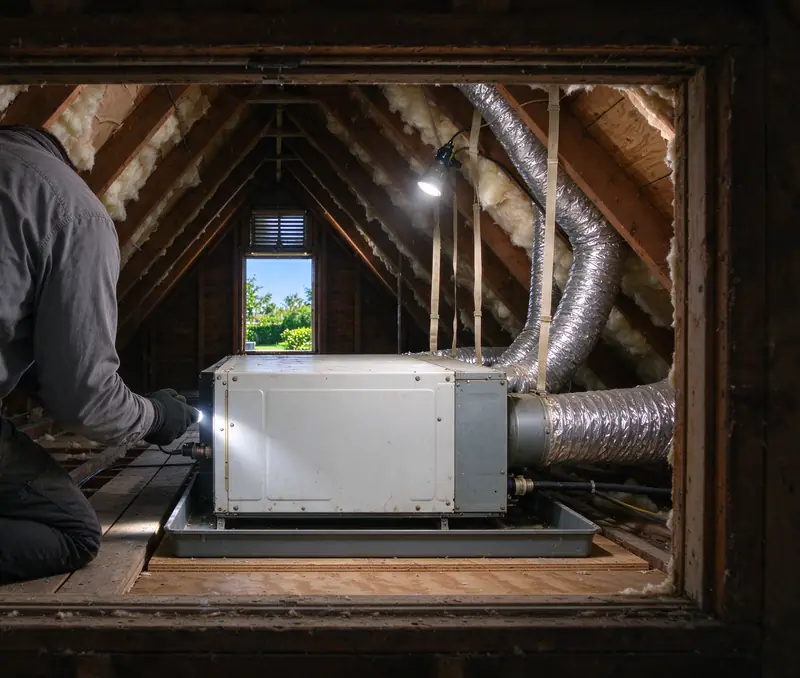
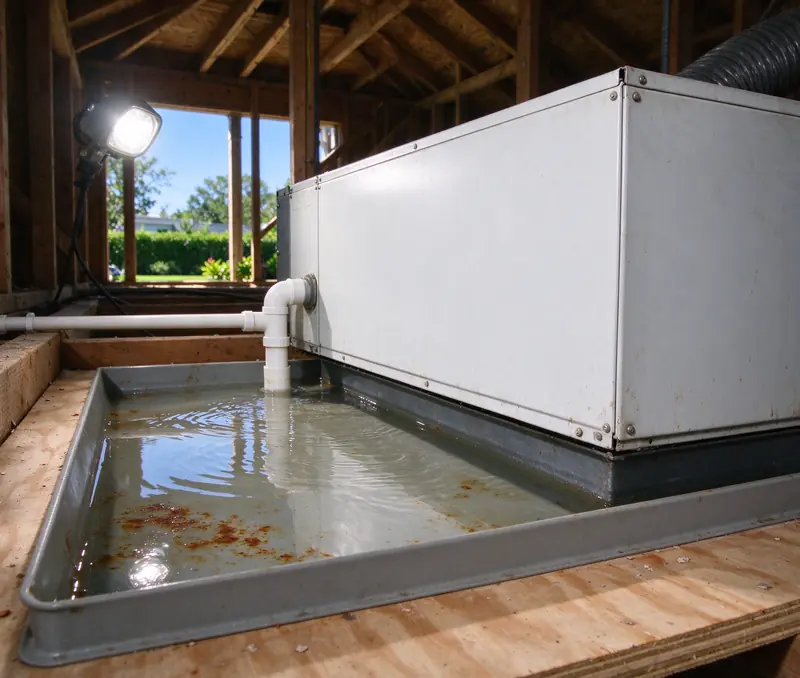
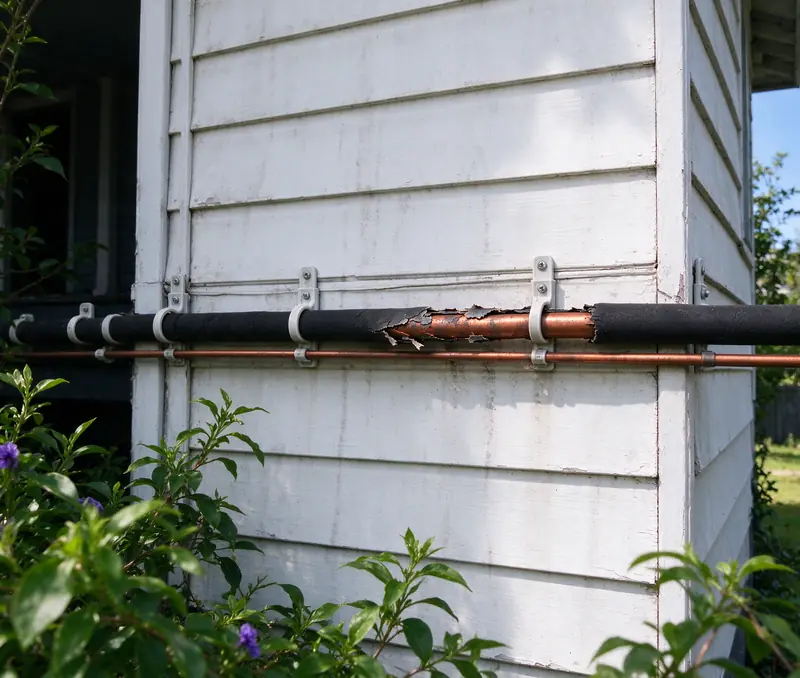
We read both nameplates for the capacity, refrigerant and manufacture date, then walk the outdoor unit, the line set and the attic. The air handler sits over a secondary pan holding water, with rust on its floor and no float switch. Along the outside wall, about eight feet of suction-line insulation is cracked and falling away.
- Dark circle, Each room: windows, sun and ceiling height for the load calculation
- Ochre square, Attic opening: headroom and joists
- Blue diamond, Return location: where a central return can draw air
- Yellow triangle, Electrical panel: rating, open spaces and existing load
- Open ring, Outdoor spot: footing and drainage
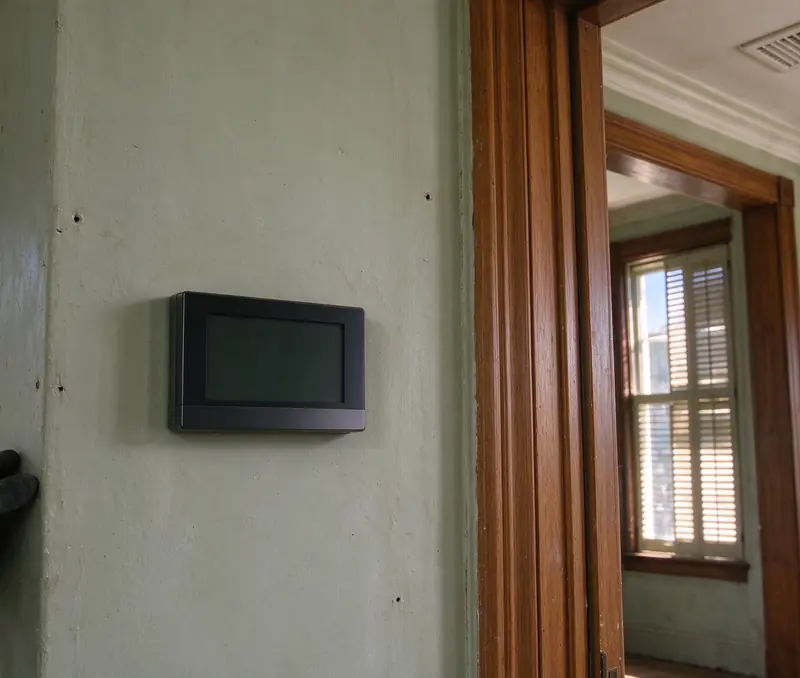
- Dark cross, Thermostat: on an inside wall
The run
Both modes, measured
We run the system in cooling, then heat, with the backup strip called on. We measure the temperature drop across the coil, the amp draw at each motor and the static pressure across the air handler. The static pressure sits above the blower's rated range, and the single return grille in the hall is small for the system's airflow.
The findings
Three next steps, no new unit
The written findings list three items in order: fix the primary drain and add a float switch to the secondary pan, replace the cracked insulation, and review the return before summer. Nothing points to replacing the system now. Each item can be priced as its own repair, so the owner decides what comes first.
When an inspection is worth booking
An inspection is for a decision you haven't made yet. These are the most common ones.
- Buying a house. You want to know what the system is, how old it is and what the first year may cost.
- A system with no records. Nobody knows when it was last serviced or what has been replaced.
- After a storm or high water. Water reached the outdoor unit, the air handler or the wiring.
- Before a big decision. You’re weighing a repair, a replacement or a duct change and want facts first.
- A house that never feels right. Rooms run warm or damp, or the system runs much longer than it used to, with no clear fault.
When another visit fits better
If the system has stopped cooling or heating, or water is coming through a ceiling, book a repair, because the visit starts with that fault. If you know the system is sound and just want it serviced, a maintenance visit is the right choice.
What we look at, and what we measure
An inspection has two halves: a careful look with the system off, then measurements with it running.
With the system off
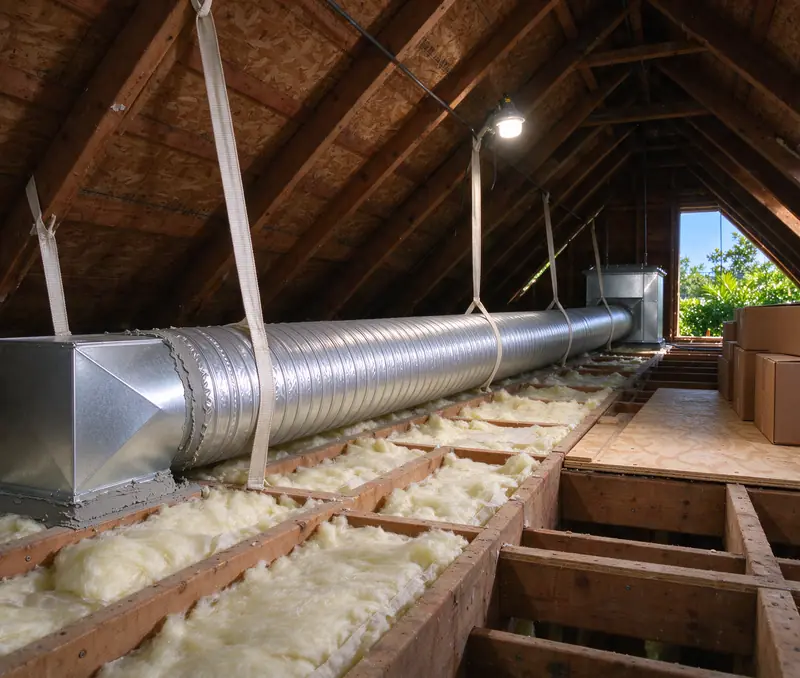
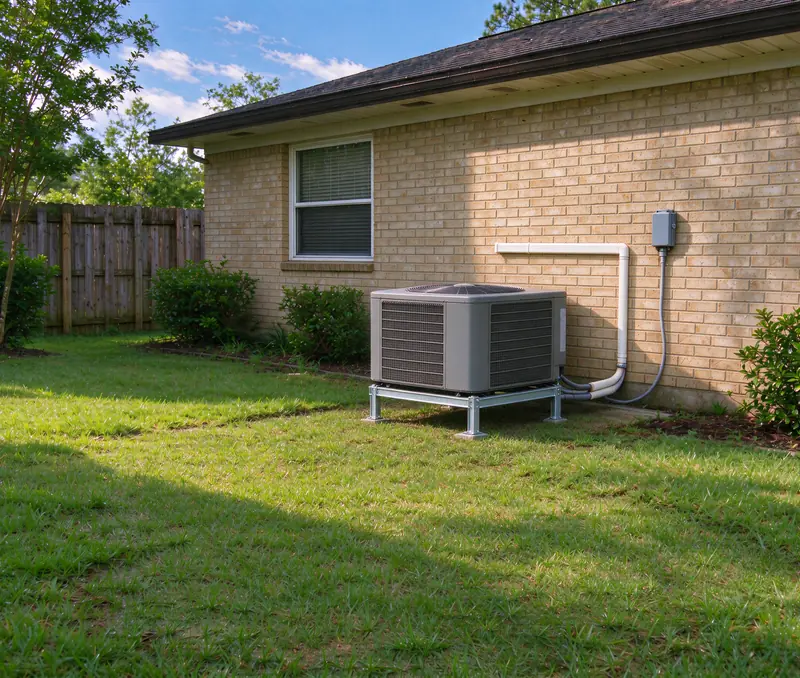
We read both nameplates for capacity, refrigerant and the manufacture date, then look at the outdoor coil, the pad or stand, the clearances and the insulation on the line set. Inside, we look at the air handler cabinet, the coil we can see, the blower, the heat strip, the drain trap, the secondary pan and the float switch. In the attic or crawlspace we follow the duct runs we can reach and check their connections. Our components guide explains what each of these parts does.
| Measurement | What it shows |
|---|---|
| Temperature drop across the coil in cooling | Whether the coil is removing heat as expected for the conditions |
| Temperature rise in heat mode | Whether the heat pump and the heat strip are adding heat |
| Amp draw at each motor and the heat strip | Electrical wear or strain, compared with the nameplate |
| Static pressure across the air handler | Whether the ducts and filter let the blower move its air |
| Defrost and changeover | Whether the reversing valve switches cleanly |
The measurements an inspection takes with the system running, and what each one shows.
Reading the results honestly
Measurements narrow things down. They rarely prove a single cause on their own.
What the readings can show
A coil that cools well, motors that draw close to their ratings and static pressure inside the blower’s range describe a system working as designed on the day. A full secondary pan, a missing float switch, burned wire or cracked insulation are plain findings with plain fixes. These go at the top of your findings.
What they can only suggest
High static pressure can come from a small return, a clogged filter, a dirty coil or crushed ducts. A weak temperature drop can mean low charge, low airflow or simply a mild, dry day. Where a reading points to more than one cause, we say so, and we name the test that would settle it, such as a duct leakage test or a load calculation. The ductwork guide covers duct testing.
Efficiency and running cost
An inspection can show whether the system is running close to how it should, but not what it costs you each month. The bill depends on the weather, your rate, the house and how the thermostat runs the backup heat. Our operating cost guide explains how SEER2, HSPF2 and the heat strip show up on a bill.
What your findings may lead to
Each finding comes with a suggested next step. Most are small; none is required.
| Finding | Suggested next step |
|---|---|
| Full or rusted secondary pan, no float switch | A drain repair and a float switch, priced as a repair |
| Dirty coils, slow drain, worn filter setup | A maintenance visit |
| High static pressure, rooms short of air | A duct review and ductwork repair |
| A failing major component on a worn system | A replacement priced beside the repair |
| Nothing significant | Nothing now; keep the findings for the next visit |
Common inspection findings and the next step we suggest for each.
Repair or replace, if it comes to that
An old system that inspects well is not a reason to replace it. A newer one with a failing compressor may be. When the findings raise that question, our repair or replace guide sets out what to weigh, and we price both options if you ask.
What an inspection costs
An inspection is one visit, priced before we book it.
How we price it
We price an inspection as a single visit and tell you the price when we book it. It follows how many systems the house has, where the air handlers sit, and whether you want extra testing such as a duct leakage test. Any repair the findings suggest is priced on its own, and only if you want it.
Sweet Olive's typical range for a residential heat pump maintenance visit is $70 to $200. If you want the system cleaned and serviced at the same visit, that is a maintenance visit, and we list its checks before we book it.