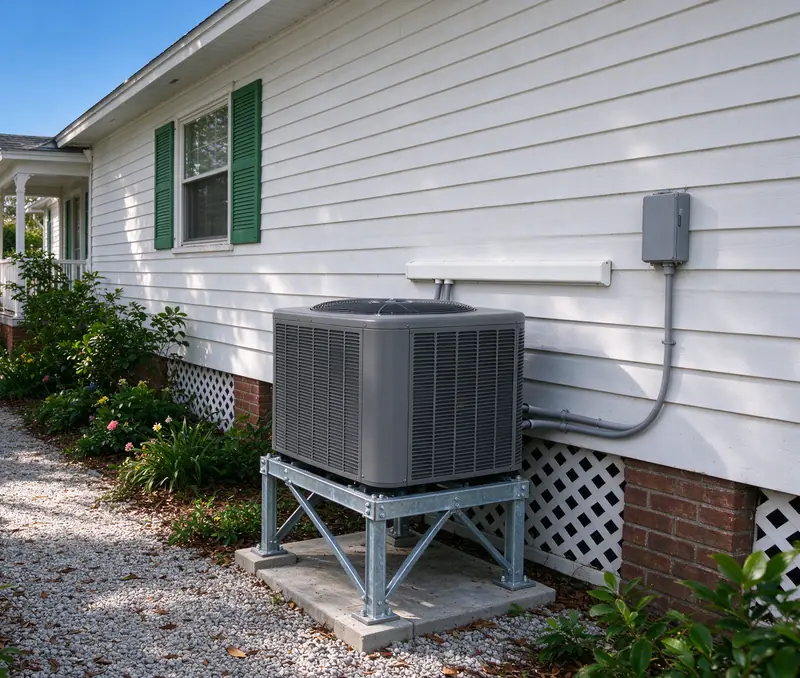
Last updated:
The short answer
A heat pump keeps heating through New Orleans winters, but its output falls as the air outside gets colder. On damp mornings the outdoor coil frosts and the system runs short defrost cycles; backup heat covers the coldest hours. Steam and briefly cooler air are normal; a long loss of heat or a solid block of ice is not.
Key takeaways
- January averages about 54°F at the New Orleans airport, with average lows near 46°F; cold snaps go lower.
- A heat pump's heating output falls as the outdoor temperature drops, so backup heat is part of the design.
- Frost and short defrost cycles are normal; a coil encased in ice is not.
- Auxiliary heat comes on by itself; emergency heat is a manual setting for when the outdoor unit can't run.
- Deep setbacks and big jumps on the thermostat can bring on the heat strip and raise the bill.
A heat pump can look and sound strange on a cold morning: steam rising from the outdoor unit, the fan stopping for a few minutes, cooler air from the registers. Most of that is the system doing its job. Knowing what normal looks like helps you spot the few things that aren’t.
Sweet Olive installs ducted heat pumps across New Orleans and sets up the backup heat and controls for winter as part of every installation. This guide covers what the system does when it gets cold, and what you can do to help it.
What a New Orleans winter asks of a heat pump
Short, mild winters on average, with a few cold snaps that the system still has to carry.
| Month | Average high | Average low | Average daily temperature |
|---|---|---|---|
| December | 64.8°F | 48.4°F | 56.6°F |
| January | 62.5°F | 46.1°F | 54.3°F |
| February | 66.4°F | 49.7°F | 58.0°F |
Winter climate normals at the New Orleans airport, from National Weather Service 1991-2020 data.
Averages hide the cold snaps
Those figures are averages. The coldest mornings of a winter fall well below them, and a raised house with an uninsulated floor feels it first. The heating load is calculated for cold conditions, not the average day, as our sizing guide explains.
Damp cold is what frosts the coil
Cold air near or below freezing, with plenty of moisture in it, is what frosts an outdoor coil. That makes damp winter mornings here a normal time for defrost cycles, even when the thermometer isn’t very low.

Why heating output drops as it gets colder
A heat pump moves heat that is already outdoors. The colder the air, the less heat there is to move, while the house needs more.
A mild winter morning
The heat pump carries the house on its own.
- Long, steady heating runs
- Warm, not hot, air from the registers
- Backup heat stays off
A cold snap
The heat pump runs and backup heat fills the gap.
- The heat pump keeps running at full output
- The strip or furnace adds heat when the controls call for it
- The house holds temperature, at a higher running cost
Backup heat on a cold morning is the design working, not the heat pump failing.
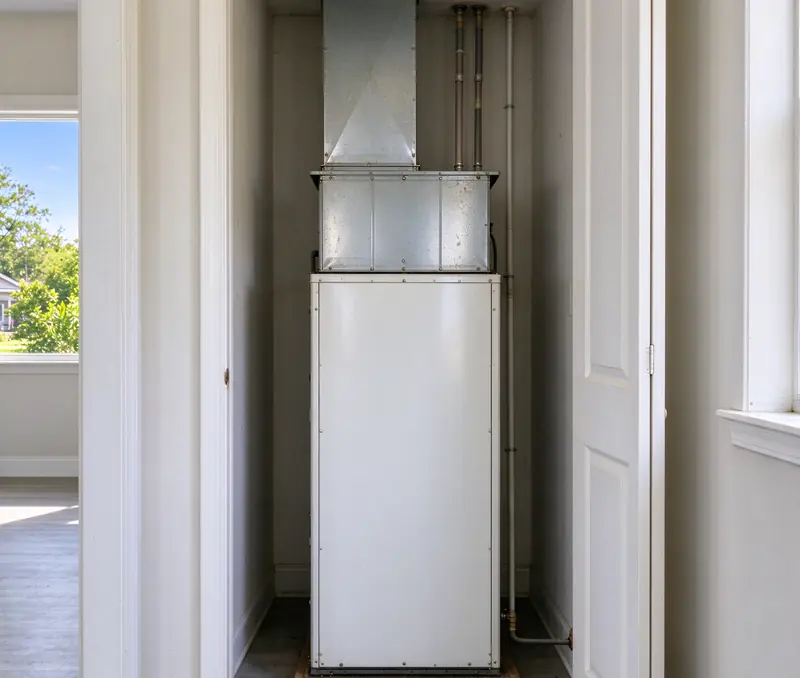
The balance point
As the outdoor temperature falls, the heat pump’s output falls and the house’s heat loss rises. The point where they cross is the balance point. Above it, the heat pump carries the house alone; below it, backup heat makes up the difference. Better insulation and tighter ducts move the balance point lower.
Why supply air feels cooler
Heat pump air leaves the registers warm, but cooler than furnace air. It can feel cool on your hand even while the room temperature holds. Rooms that won’t reach the setpoint are a different matter, and worth telling us about.
Defrost: the normal part that looks like a fault
On damp, cold mornings frost builds on the outdoor coil, and the system clears it by itself.
| What you see or hear | Normal | Worth a call |
|---|---|---|
| Frost on the outdoor coil | A light, even frost that clears after a defrost cycle | Thick ice that stays, or ice on the top and fan |
| Steam from the outdoor unit | A cloud of vapour during or after defrost | Smoke, or a burning smell |
| The outdoor fan stops | For a few minutes during defrost, with a whoosh when it ends | Stopped for a long time while the compressor hums |
| Cooler air indoors | For a few minutes during defrost | Cool air for a long stretch with the system running |
| Water under the outdoor unit | Meltwater draining away after defrost | Water pooling and freezing under or around the unit |
What is normal in winter, and what is worth a call.
What happens during defrost
The system briefly runs in cooling mode to warm the outdoor coil and melt the frost. The outdoor fan stops so the heat stays on the coil. Backup heat usually comes on so the air indoors doesn’t turn cold. After a few minutes the valve switches back, often with a whoosh, and the fan restarts.
Where the meltwater goes
Defrost water runs off the coil and needs somewhere to drain. A unit on a pad or stand with open ground below lets it soak away; a unit boxed in, or on ground that holds water, can freeze it back onto the coil. Our placement guide covers stands and drainage.
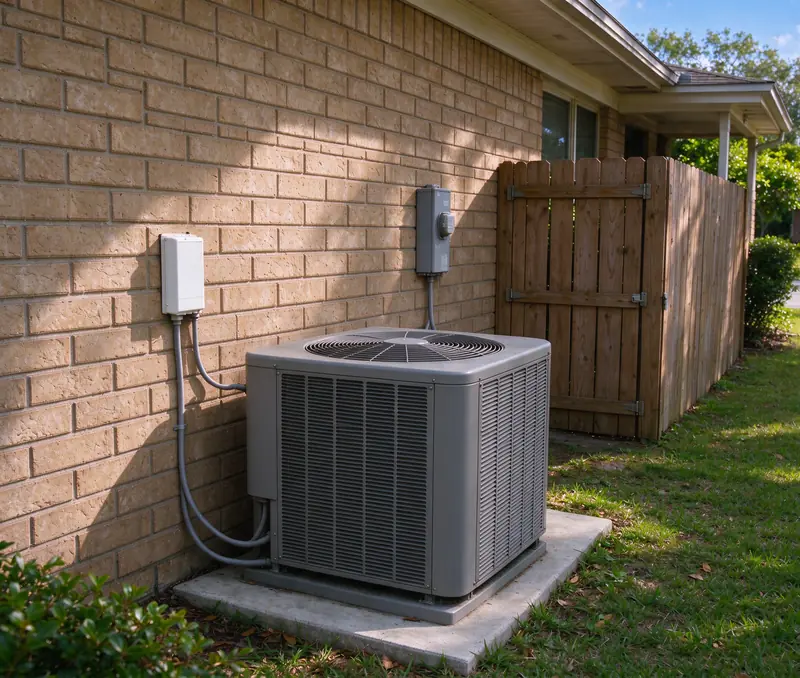
Auxiliary heat and emergency heat
Both use the backup heat. One is automatic and normal; the other is a manual setting for when the outdoor unit can't run.
| Setting | What runs | When it should run |
|---|---|---|
| Auxiliary heat (shown as aux or aux heat) | The heat pump plus the backup heat | On cold mornings, during defrost, and while recovering a large temperature gap, called by the controls |
| Emergency heat (shown as em heat) | The backup heat alone; the heat pump stays off | Only when the outdoor unit has failed or is damaged, until it is checked |
The two backup heat settings on a heat pump thermostat, and when each one runs.
The outdoor lockout
Many systems can be set so the heat strip doesn’t run above a chosen outdoor temperature, leaving mild mornings to the heat pump. Where the equipment supports it, we set the lockout at startup. Our thermostat compatibility guide lists the settings that matter.
Dual fuel works the same way
In a house that keeps a gas furnace as backup, the furnace plays the strip’s part below a changeover temperature. Our dual-fuel guide explains how that handover is set.
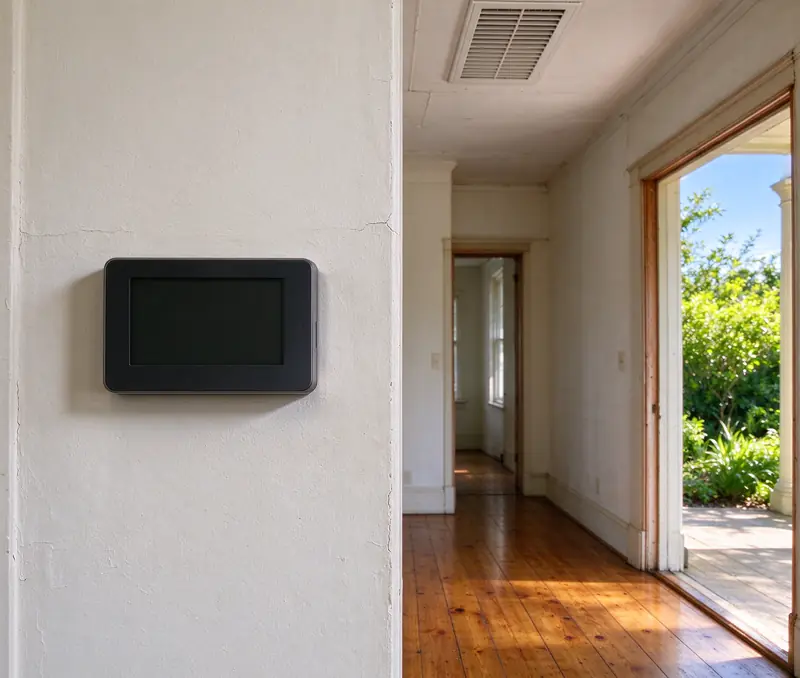
Before and during a cold snap
A few things help the system through a freeze. Others are better left alone.
Worth doing
Small steps that keep the system breathing and draining.
- Keep leaves, plants and stored items clear of the outdoor unit
- Leave the system in normal heat, not emergency heat
- Hold a steady setpoint instead of deep setbacks
- Keep the filter clean so air moves freely
Leave alone
Things that cause damage or higher bills.
- Chipping or prying ice off the coil fins
- Pouring hot water on the unit
- Covering the unit while it is heating
- Opening panels or resetting breakers again and again
If ice stays on the coil for hours, switch to calling us rather than clearing it yourself.
What we set up for winter
At installation we size the backup heat from the house’s heating load, confirm the reversing valve, defrost and heat strip at startup, and leave the readings with you. The heat pump’s output at low temperatures is compared with the house’s load before the equipment is chosen.
When to call
A house that won’t hold temperature with the system running, ice that stays on the coil, or emergency heat that has to stay on all point to a fault. Our warning signs guide and heat pump repair page cover the next step, and the operating cost guide explains what cold weeks do to the bill.