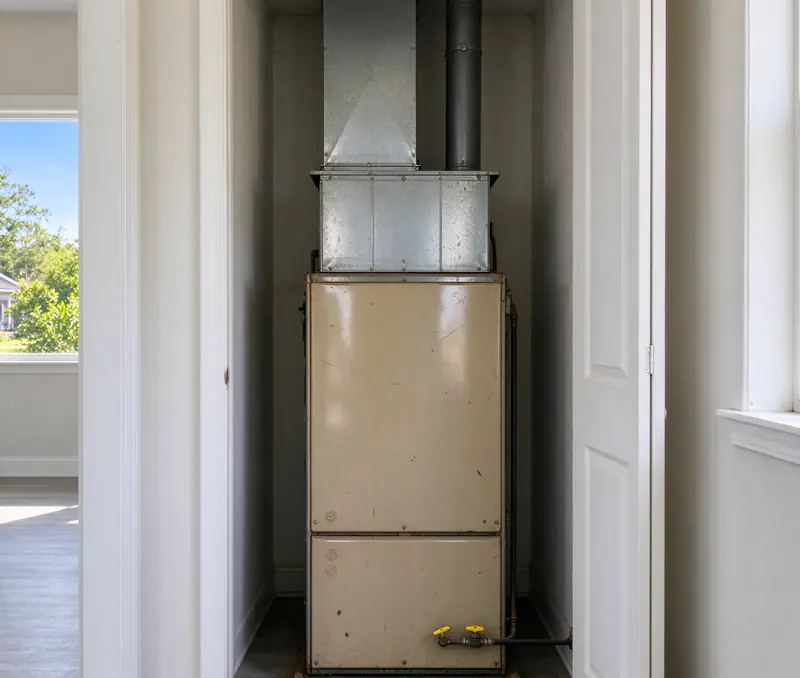
Last updated:
The short answer
A dual-fuel system pairs a heat pump with a gas furnace. The heat pump heats and cools most of the year; below a changeover temperature set in the controls, the furnace takes over. It makes sense when the furnace is sound, the heat pump coil can sit on it, and your gas and electric rates favour it.
Key takeaways
- The heat pump does all the cooling and most of the heating; the furnace is the cold-weather backup.
- The changeover temperature is a setting, chosen from the equipment, the house and your rates.
- Only a furnace that passes combustion, venting and condition checks is worth keeping.
- An all-electric heat strip is the other kind of backup, with its own panel needs.
- Running-cost comparisons use the rates on your own gas and electric bills.
If your house already has a gas furnace and central air, a heat pump doesn’t have to mean pulling the furnace out. In a dual-fuel setup the heat pump does the cooling and most of the heating, and the furnace stays on as backup for the coldest hours.
Sweet Olive installs ducted heat pumps across New Orleans and lays out both backup options when a house has a working furnace. This guide compares them, explains how the handover works, and lists what we check before a furnace stays. The sizing guide covers how backup heat is sized in the first place.
Two ways to back up a heat pump
Every heat pump here needs backup heat for the coldest mornings and for defrost. The question is which kind.
| What changes | All-electric with a heat strip | Dual fuel with a gas furnace |
|---|---|---|
| Backup heat | Resistance coils inside the air handler | The gas furnace’s burner |
| Indoor equipment | A matched air handler with the strip inside | The heat pump coil on top of the existing or a new furnace |
| What the house keeps | No gas appliance for heating | The gas line, the flue and the furnace |
| Electrical need | A circuit sized for the strip, which can be the largest load in the system | The furnace blower circuit; no large strip load |
| Controls | Backup heat on its own call, with an outdoor lockout where supported | A thermostat or control that runs dual fuel and holds the changeover setting |
| Upkeep | Electrical checks on the strip | Combustion, flue and heat exchanger checks on the furnace each year |
An all-electric setup with a heat strip compared with a dual-fuel setup with a gas furnace.
What dual fuel keeps, and what it doesn't
Dual fuel keeps the furnace for heating only. The outdoor unit is new, the coil is new and matched to it, and the thermostat usually changes. It is not a way to keep an old air conditioner; it is a way to keep a sound furnace while the cooling side gets a full replacement.
Why the panel matters
A heat strip draws a lot of power when it runs, and an older panel may not have room for it. Keeping a furnace avoids that load, which can save a panel upgrade. Our electrical readiness guide covers the panel check.
How the handover works
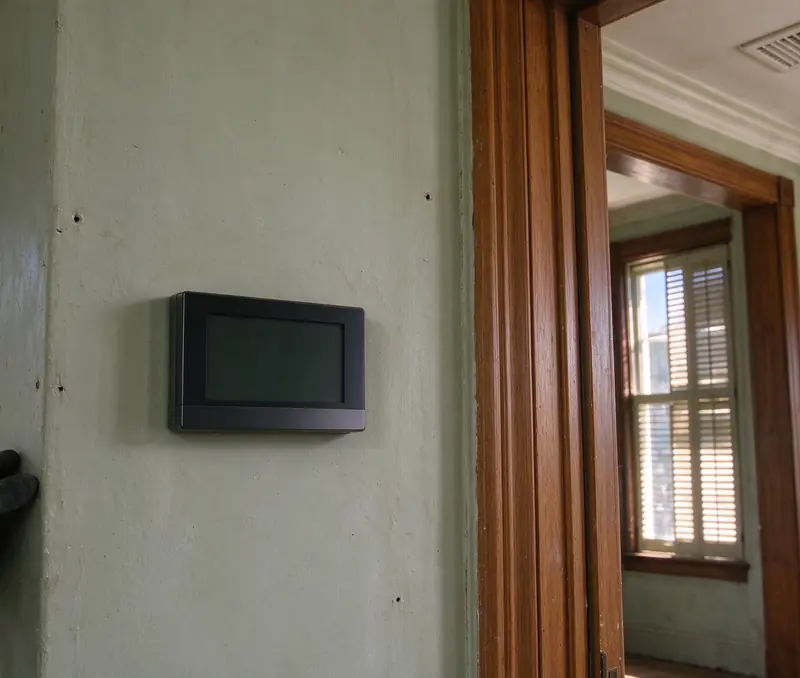
The heat pump heats until the outdoor temperature falls to a setting in the controls; below it, the furnace takes over.
46.1°F
Average January low temperature at the New Orleans airport, from National Weather Service 1991-2020 climate normals
Most January nights don’t fall far below that, though cold snaps do. How often the furnace runs depends on where the changeover is set, and on how cold your winter turns out.
Mild weather: the heat pump alone
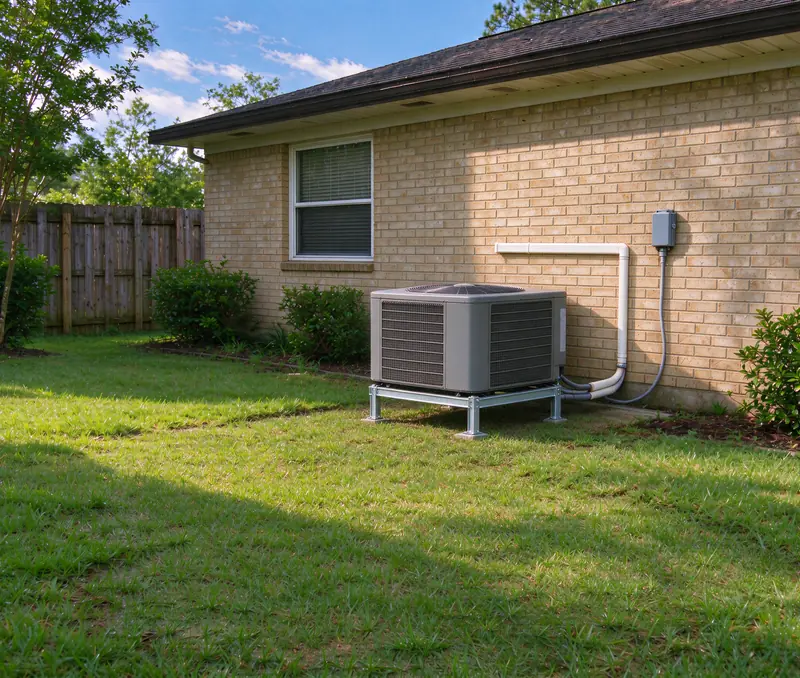
On most winter days the heat pump carries the house by itself, moving heat in from outside. The furnace stays off.
Below the changeover: the furnace
As it gets colder, the heat pump collects less heat while the house loses more. Below the changeover setting the controls switch to the furnace, which delivers warmer air whatever the weather.
Defrost: a short cover
On cold, damp mornings the outdoor coil frosts and the heat pump runs a short defrost cycle. Some dual-fuel setups bring on the furnace for those minutes so the air stays warm. Our cold-weather guide describes defrost in more detail.
Where the changeover is set
The changeover is chosen from the heat pump’s heating output at low temperatures, the house’s heat loss and the relative price of gas and electricity on your accounts. It is a setting, so it can be changed later if your rates change.
Running cost depends on your own bills
No citywide figure settles the gas-or-electric question. Your rates and your house do.
| Input | Where it comes from |
|---|---|
| Electric rate | Your electric bill; Entergy New Orleans rates depend on the account and the address |
| Gas rate | Your gas bill, including any fixed monthly charge that stays while the gas account stays open |
| Heat pump heating efficiency | The equipment’s HSPF2 rating and its output at low temperatures |
| Furnace efficiency | The AFUE rating on the furnace label |
| Changeover setting | The outdoor temperature where heating hands over |
| How you run the house | Setpoints, setbacks and the hours you are home |
The inputs a fair dual-fuel running-cost comparison uses, and where each comes from.
Why the fixed gas charge counts
If the furnace is the only gas appliance, keeping it keeps a gas account and its monthly charges for heat used on a handful of cold days. If you also cook or heat water with gas, that charge is paid anyway, and the comparison shifts toward dual fuel.
What we bring to the comparison
We use the rates on your bills, the furnace’s label and the proposed heat pump’s ratings, and keep the same indoor temperatures on both sides. It is an estimate, not a promised saving. Our operating cost guide shows the method.

Is your furnace worth keeping?
A furnace earns its place as backup only if it is safe, sound and able to carry the heat pump coil.
- Dark circle, Each room: windows, sun and ceiling height for the load calculation
- Ochre square, Attic opening: headroom and joists
- Blue diamond, Return location: where a central return can draw air
- Yellow triangle, Electrical panel: rating, open spaces and existing load
- Open ring, Outdoor spot: footing and drainage
- Dark cross, Thermostat: on an inside wall
What we check before a furnace stays
- Combustion and venting. The burner, the flue and its connections, checked separately from the heat pump work.
- The heat exchanger and cabinet condition. Rust, cracks or a worn blower point toward replacing it.
- Space for the coil. The heat pump coil sits on the furnace’s outlet, so the cabinet and closet need the height.
- The blower. It has to move the airflow the heat pump needs in cooling, not just the airflow for heating.
- The gas line and controls. A thermostat or control that can run dual fuel and hold a changeover setting.
Dual fuel often fits when
The furnace is sound and gas stays in the house anyway.
- The furnace passes its checks
- Gas also serves cooking or water heating
- The panel has little room for a large strip
All-electric often fits when
The furnace is worn or the gas is only for heat.
- The furnace or its flue needs work
- The furnace is the only gas appliance
- You want one fuel and simpler upkeep
The furnace's condition and your bills decide; the estimate states which setup the scope covers.
Our heat pump and gas furnace guide compares the two heating sources more broadly, and furnace to heat pump conversion covers houses moving off gas entirely. If the house cools with an older air conditioner, the central AC guide explains what the switch replaces.
What the controls have to do
Dual fuel only works as well as the control that decides which heat source runs.
What the control must handle
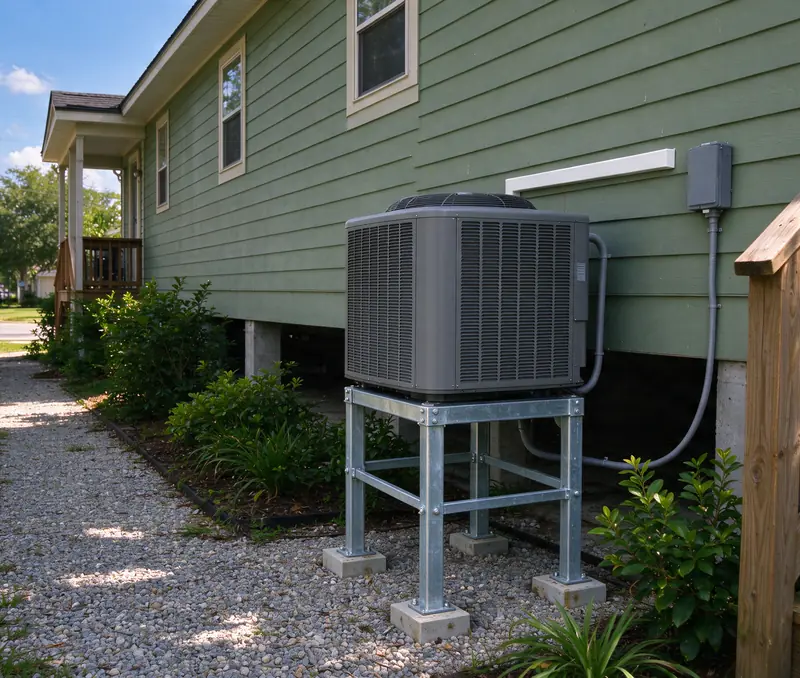
- An outdoor temperature reading, from a sensor or the equipment itself.
- The changeover setting, and never both heat sources on the coil at once in normal heating.
- How defrost is covered, set at startup.
- Cooling and the fan, the same as any heat pump.
Getting it set up
Where the estimate covers a dual-fuel setup, the changeover and the defrost behaviour are set at startup and gone through with you at handover. Our thermostat compatibility guide covers what to check before changing a control later.