Last updated:
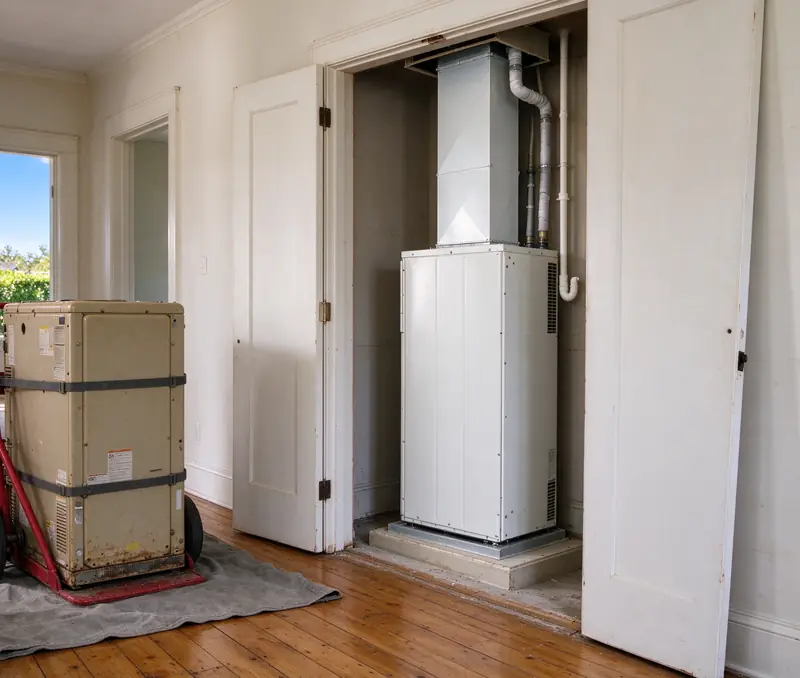
You have a gas furnace in the attic or a hall closet, an air conditioner outside, and two systems to service, two sets of parts to fail and a gas appliance in the house. A heat pump can do both jobs with one outdoor unit and one indoor cabinet, but the change touches the ducts, the panel and the gas line, so it has to be planned before anything comes out.
Sweet Olive converts homes across New Orleans from a gas furnace and central air to a ducted air-source heat pump. On the first visit we measure the rooms for a load calculation, test the existing ducts, check the panel for the new air handler circuit, and look at the flue and everything else in the house that uses gas. Your written estimate then sets out the conversion, and a pairing with your furnace where that fits, priced line by line.
If the house has a heat pump already, heat pump replacement covers that job. If it has no central system at all, start with heat pump installation.
A typical Broadmoor furnace to heat pump conversion
A gas furnace in the attic, an air conditioner outside and an owner who wants one system: how the conversion is planned around what stays.
- Location
- Broadmoor, New Orleans
- Home
- Raised single-story home, about 1,850 sq ft, three bedrooms
- System
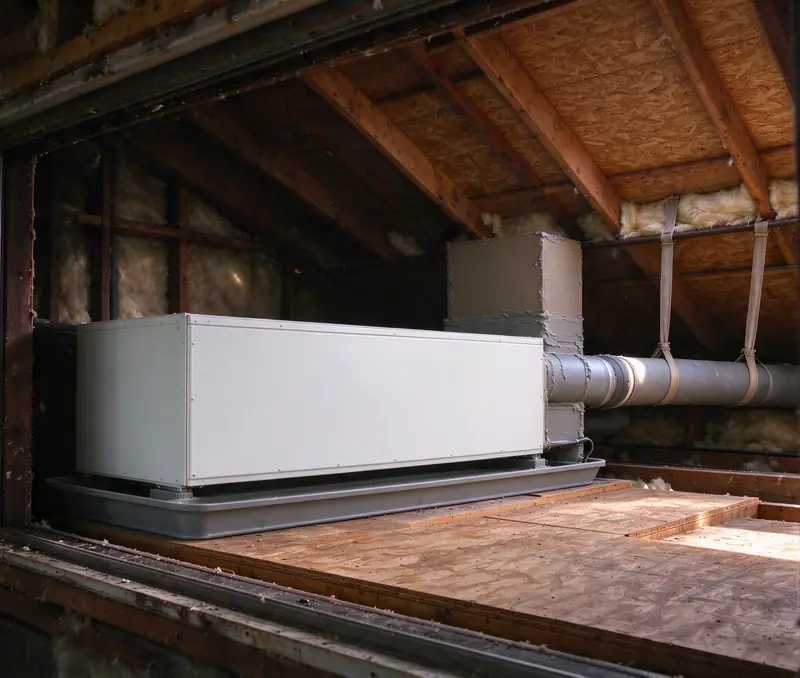
- Nominal 3-ton two-stage heat pump with an attic air handler, replacing an attic gas furnace and a central air conditioner
- Backup heat
- Electric heat strip sized from the heating load
- Gas and flue
- Furnace branch capped by a gas fitter; flue removed and roof patched
- Line set
- 30 feet, new
- Project price
- $10,400
- Duration
- 3 working days
The house
Two systems sharing one set of ducts
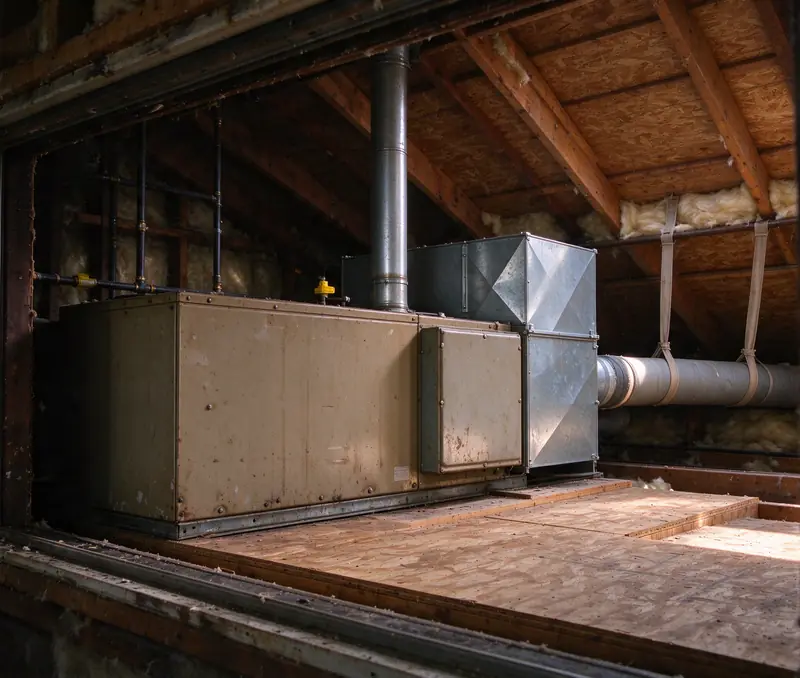
The house is a raised, single-story home in Broadmoor, about 1,850 square feet with three bedrooms. A horizontal gas furnace sits in the attic with a cooling coil on its outlet, a metal flue runs up through the roof, and a central air conditioner sits outside on a stand. The water heater and the range stay on gas.
The decision
Convert, rather than pair a heat pump with the furnace
We price both paths: a heat pump paired with the existing furnace for backup, or a full conversion. The furnace is past its best years and the owner wants no fuel-burning appliance in the attic, so the plan is a full conversion. The load calculation supports a nominal three-ton, two-stage heat pump, with an electric heat strip sized from the heating load, not the largest the cabinet accepts.
- Dark circle, Air handler: on an attic platform, over a secondary drain pan
- Ochre square, Supply runs: dropping to ceiling registers
- Blue diamond, Central return: in the hall ceiling
- Yellow triangle, Jumper duct: from a closed bedroom to the hall
- Open ring, Line set and drain: along the outside wall
- Dark cross, Outdoor unit: on a raised stand, with its disconnect
The work
Gas, flue and wiring in the right order
Day one: a gas fitter caps the furnace branch at its tee, we pull the furnace, coil and flue, and the roof opening is patched and flashed. The new air handler goes on the same platform over a new secondary pan with a float switch, and the plenum transitions are rebuilt and sealed with mastic. Day two sets the outdoor unit on the existing stand and runs a new 30-foot line set while an electrician adds the air handler circuit. Day three is the pressure test, evacuation, charge and startup.
The handover
Both modes proven
At startup we run cooling, then heat, then force a defrost cycle and confirm the heat strip comes on only when the thermostat calls for it. The readings stay with you and the City inspection follows. The goal is one electric system that heats and cools the house, with gas left only where the owner wants it.
Is a conversion right for your house?
Most houses with a furnace and central air can take a heat pump. The real question is whether a full conversion or a pairing with the furnace suits you better.
Pair a heat pump with the furnace
The heat pump heats most of the time and the furnace takes over on the coldest mornings.
- Keeps a sound furnace working
- No new heat strip circuit
- Two systems to service, and gas stays in the house
Full conversion
The heat pump heats, with an electric heat strip as backup.
- One system to service
- The furnace, its flue and the gas branch go
- A new circuit for the air handler and heat strip
Pairing suits a furnace with years left in it. A full conversion suits a furnace near its end, or a house where you want no gas appliance in the attic or closet.
When to keep the furnace alone
If your air conditioner is new and the furnace is sound, there may be no reason to convert yet. An air conditioner can’t run in heat mode, so a conversion replaces it, and the timing often comes down to which unit wears out first. Our heat pump vs gas furnace guide and dual-fuel guide compare the paths in depth.
What we check on the furnace, the air conditioner and the ducts
A conversion reuses the house's air path, so we look closely at what the furnace and the old cooling coil leave behind.
- The rooms. Windows, sun, insulation and air leaks feed the load calculation for heating and cooling.
- The furnace and coil. Where they sit, how the plenums connect, and how much room a new air handler has.
- The ducts. Tested for leakage and static pressure before we plan to reuse them.
- The flue and gas branch. Where the flue leaves the house and where the furnace branch can be capped.
- The panel. Its rating, open spaces and what is already on it.
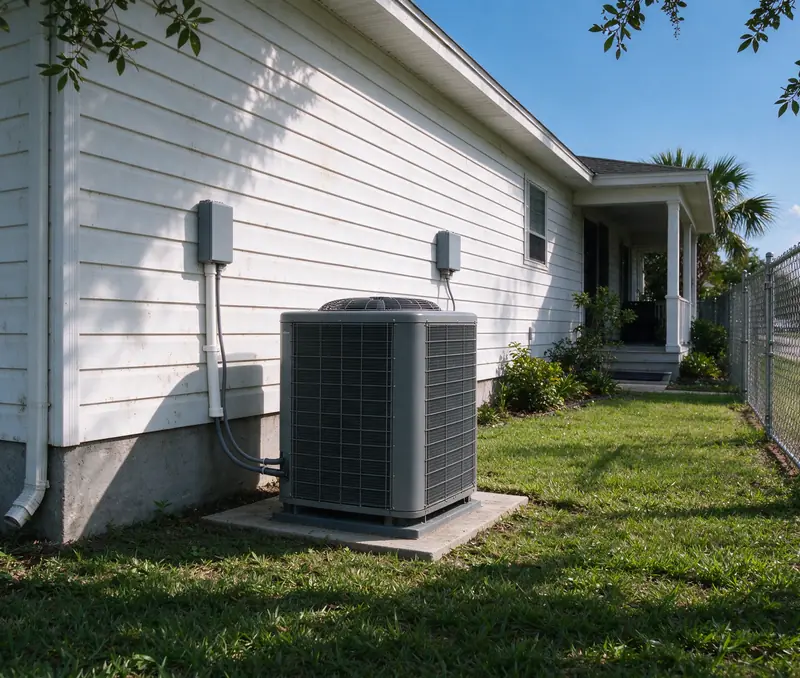
- The outdoor spot. Whether the air conditioner’s pad or stand can carry the heat pump.
- Dark circle, Each room: windows, sun and ceiling height for the load calculation
- Ochre square, Attic opening: headroom and joists
- Blue diamond, Return location: where a central return can draw air
- Yellow triangle, Electrical panel: rating, open spaces and existing load
- Open ring, Outdoor spot: footing and drainage
- Dark cross, Thermostat: on an inside wall
Why the ducts matter more than you'd think
With a furnace, a leaky joint in a hot attic loses some very hot air and the furnace makes up for it fast. A heat pump delivers warm air at a lower temperature, often over longer runs, so the same leak or an undersized return costs it more comfort, and the registers can feel cool. We measure leakage and static pressure before we decide what to reuse, and our ductwork repair page covers the fixes.
Backup heat and the electrical side
A furnace brings its own heat. A heat pump needs a plan for cold mornings and defrost, and that plan has an electrical cost.
Sizing the heat strip
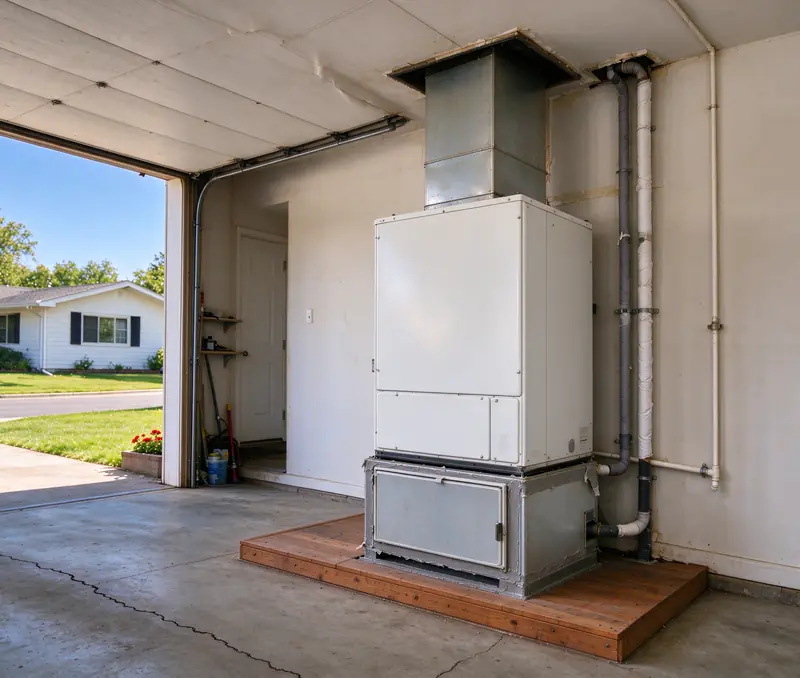
Winters here are short, but cold snaps come, and the outdoor coil needs defrosting on damp mornings. An electric heat strip inside the air handler covers both. We size it from your heating load, not at the largest strip the cabinet accepts, because a bigger strip needs a bigger circuit and costs more to run. Our sizing guide explains heating and cooling loads, and the cold weather guide covers how the strip and the heat pump share the work.
The new circuit
A gas furnace runs on a small circuit for its blower. An air handler with a heat strip needs a much larger dedicated one, and the heat pump outside needs its own. We check the panel’s rating and open spaces at the first visit; an electrician adds the circuits, and a panel upgrade, if needed, is a separate line. More in the electrical readiness guide.
Controls that know the difference
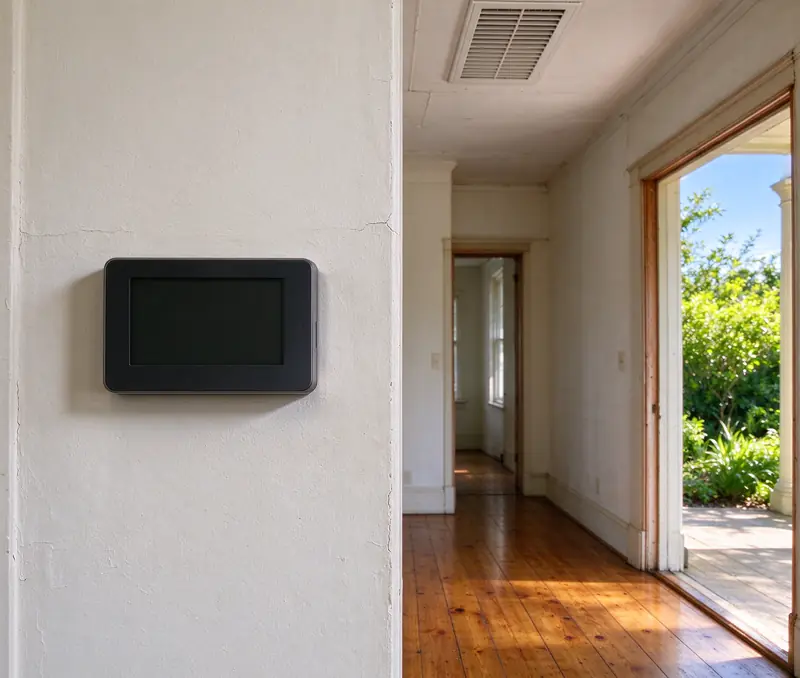
A furnace thermostat calls for heat and nothing more. A heat pump thermostat has to manage the reversing valve, the compressor stages and when the strip may run, and in a paired system, when the furnace takes over. The thermostat guide explains the wiring.
Gas, removal and installation, in order
A conversion has more trades and more steps than a replacement, so we sequence them carefully.
Gas off and capped first
The gas supply to the furnace is shut off and a qualified gas fitter caps the branch, leaving the water heater, range or anything else that stays on gas connected. Your estimate states who does this work.
Old equipment out
We recover the refrigerant from the air conditioner, then take out the outdoor unit, the furnace, its cooling coil and the flue. The flue opening in the roof or wall is closed as your estimate states.
New equipment in
The air handler goes where the furnace stood, with the plenum transitions rebuilt and sealed with mastic and a secondary pan and float switch wherever it sits above a ceiling. The heat pump goes on its pad or stand, and the line set is brazed under nitrogen, pressure-tested and evacuated.
Startup in both modes
We verify the charge, measure airflow and static pressure, test the drain, then run cooling, heat, a defrost cycle and the heat strip. The readings are left with you, and the permit inspection follows. The heat pump vs gas furnace guide covers what changes in day-to-day use.
What a conversion costs
A conversion is priced like a replacement, with the gas, flue and electrical work added as their own lines.
Sweet Olive's typical range for a residential ducted heat pump replacement is $4,250 to $11,750. A conversion sits in the same range, with the furnace removal, gas and flue work and the new circuit shown as separate lines. We set your price after the site visit and write it into your estimate line by line.
What moves a conversion price
- Full conversion or pairing. Pairing keeps the furnace and avoids the heat strip circuit.
- Capacity and efficiency tier. Two-stage and variable-speed equipment costs more.
- The ducts. Sound ducts keep it down; added returns or new runs raise it.
- The electrical work. A new circuit is routine; a panel upgrade is a separate line.
- Gas and flue. Capping the branch, removing the flue and closing the roof or wall opening.
- Access. An attic furnace is harder to remove and replace than one in a closet.
Tax credits and rebates
The federal 25C credit no longer applies to equipment placed in service after December 31, 2025, according to IRS guidance. Utility rebates have their own rules on which projects qualify, so we check your account and the proposed equipment before counting any. See the rebate guide and the cost guide.