Last updated:
The short answer
A heat pump dries the air only while warm, damp air crosses a cold indoor coil and the water drains away. Long, steady runs at the right airflow remove the most moisture. Short cycles, a fan left on, leaky return ducts and oversized equipment let damp air back in, so a house can reach its setpoint and feel clammy.
Key takeaways
- The thermostat reads temperature; how damp the house feels is a separate measure.
- Moisture comes off the coil only during long enough runs, so oversizing works against you.
- A fan set to ON between cycles can return water from the coil to the house.
- Return-side duct leaks in a hot attic bring outdoor moisture straight in.
- No equipment holds a set humidity in every house; design and setup decide most of it.
The thermostat says 75 and the back bedroom still feels like the porch. That happens in New Orleans because a cooling system here has two jobs: lowering the temperature and taking water out of the air. A system can finish the first job and fall short on the second.
Sweet Olive installs and services ducted heat pumps across New Orleans, and humidity is one of the first things we ask about at a visit. This guide explains where the water goes, why some houses stay clammy, and which fixes belong to settings, ducts or equipment. For how capacity is chosen, see the sizing guide.
Two loads on every summer afternoon
The heat you feel and the moisture you feel are separate loads, and the system has to handle both.
Below 60%
Indoor relative humidity that EPA's mold guidance suggests keeping, ideally between 30 and 50 percent
A target to aim for, measured with an inexpensive humidity meter in the rooms that bother you. It isn’t a promise any system makes for every house.
Sensible and latent
A load calculation splits cooling into a sensible load, the heat that raises the temperature, and a latent load, the moisture from outdoor air leaking in, from people, from cooking and from showers. In a humid climate the latent share is large, and the equipment is chosen against both numbers, at the airflow your ducts can deliver.

What happens on the coil
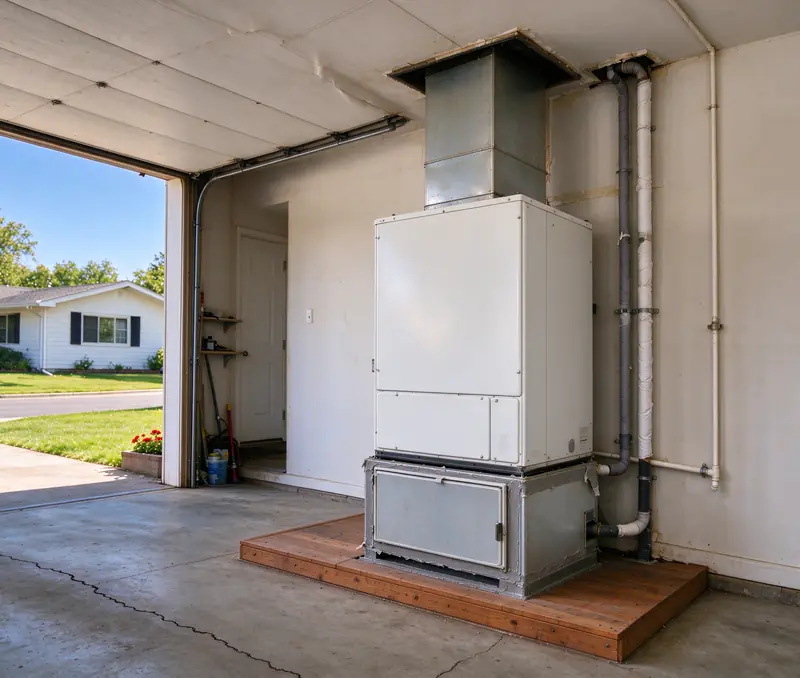
Air crossing the indoor coil cools below its dew point, and water condenses on the fins. The coil has to run long enough to wet its surface before water starts dripping into the drain pan. A short run cools the air and stops before much water leaves. When the compressor stops, water still sitting on the coil can return to the air if the blower keeps running.
Why a house stays clammy at the setpoint
Several causes feel the same from the sofa. Each one has a different check and a different fix.
| Cause | What you notice | What we check |
|---|---|---|
| Oversized equipment | Short runs, cool but sticky rooms, especially in spring and fall | Run times and capacity against the load calculation |
| Fan left on between cycles | Humidity climbs a little after each cycle ends | Thermostat fan setting and fan-delay options |
| Blower airflow set high | Plenty of cold air, not much drying | Airflow per ton against the manufacturer’s range |
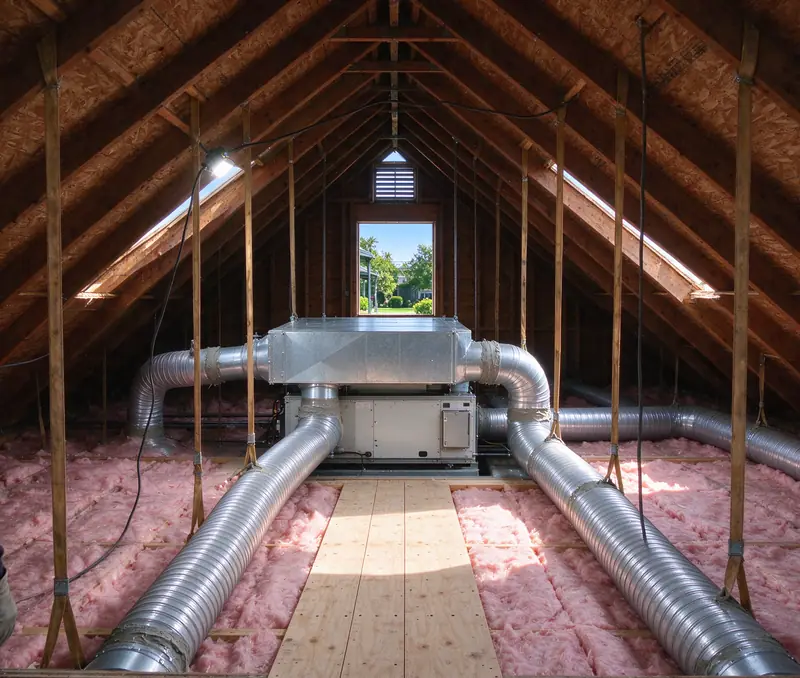
| Return leaks in the attic | Musty smell, damp air near returns, high bills | Duct leakage on the return side |
| No return path from closed rooms | One bedroom warm and damp with the door shut | Pressure in the room with the door closed |
| Controls that don’t match the equipment | A two-stage system that only runs high stage | Thermostat wiring and setup |
| Slow or blocked drain | Water in the secondary pan, float switch tripping | The drain line, trap and pan |
Common causes of damp rooms at the right temperature, what you notice, and what we check.
Distribution or moisture?
A room that is both warm and damp usually isn’t getting enough air: a crushed run, a closed damper, or no way back to the return. A whole house that is cool but damp points to moisture removal: run time, airflow or fan settings. We separate the two before suggesting anything, because the fixes don’t overlap. Our ductwork guide covers the distribution side.
Settings that help, and ones that don't
A few control choices change moisture removal without touching the equipment.
Fan on AUTO
The blower runs only while the system is cooling.
- Water drains off the coil between cycles
- Less moisture returns to the house
- Some controls add a short fan delay to finish the cycle
Fan on ON
The blower runs all the time.
- Steadier air movement and filtering
- Pushes air across the wet coil between cycles
- Can raise indoor humidity in summer
In a humid summer, AUTO is the safer default unless the system has a fan mode designed for dehumidifying.
Turning the thermostat lower
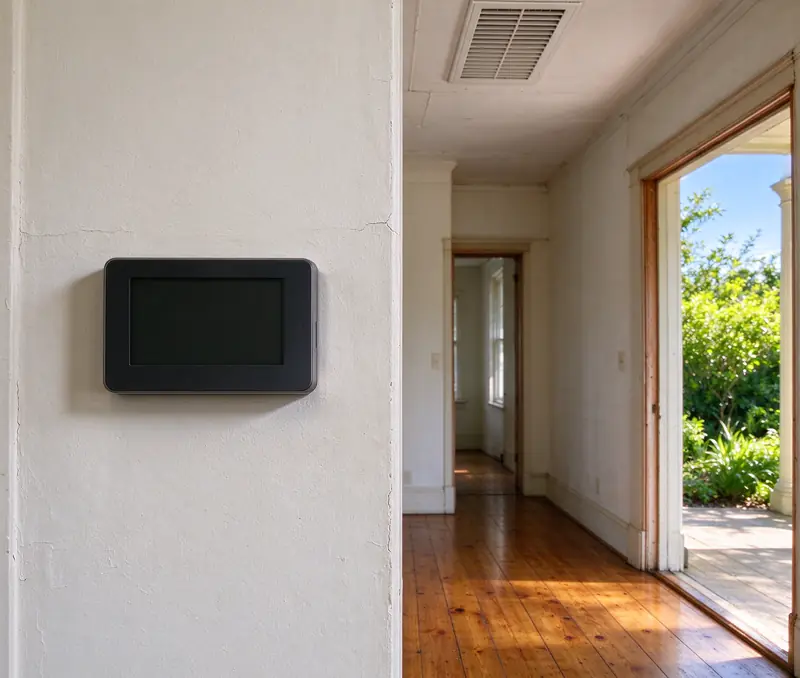
A lower setpoint makes the system run longer, which removes more water, but it overcools the house to get there and costs more to run. When the house feels damp at a reasonable setpoint, the fix is usually in airflow, run time or ducts. Some thermostats can call for dehumidifying, slowing the blower or overcooling slightly by design; they only work when matched to equipment that supports it. Our thermostat compatibility guide explains the checks.
Equipment choices for a humid climate
Equipment matters most when the house and ducts are already sound.
| Equipment | How it handles moisture | What to plan for |
|---|---|---|
| Single-stage, sized closely | Removes water well on hot afternoons; shorter runs in mild weather remove less | Close sizing matters most |
| Two-stage | Long low-stage runs dry the air steadily | A thermostat that calls each stage |
| Variable-speed | Slows down to match small loads and keeps the coil wet; some models slow the blower to dehumidify | The manufacturer’s matched control for full features |
How each type of heat pump handles moisture, and what to plan for with each.
Equipment can’t fix moisture coming in from outside. Air leaks around the house, leaky return ducts and bathroom fans that don’t vent outdoors all add latent load. Our staging comparison covers the equipment side in depth, and the operating cost guide explains what longer runs mean for the bill.
When moisture means call us
Most damp-room complaints are comfort problems. A few signs mean water is going somewhere it shouldn't.
Call soon
- Water in the secondary drain pan under an attic air handler, or a float switch shutting the system off.
- Stains or drips on a ceiling below the air handler or around a supply register.
- Musty smells from the returns or the air handler closet.
- Ice on the refrigerant lines or the indoor coil.
Plan a visit
- One room damp and warm with the door shut.
- Cool but sticky rooms through spring and fall.
- Humidity readings that stay above 60 percent in several rooms.
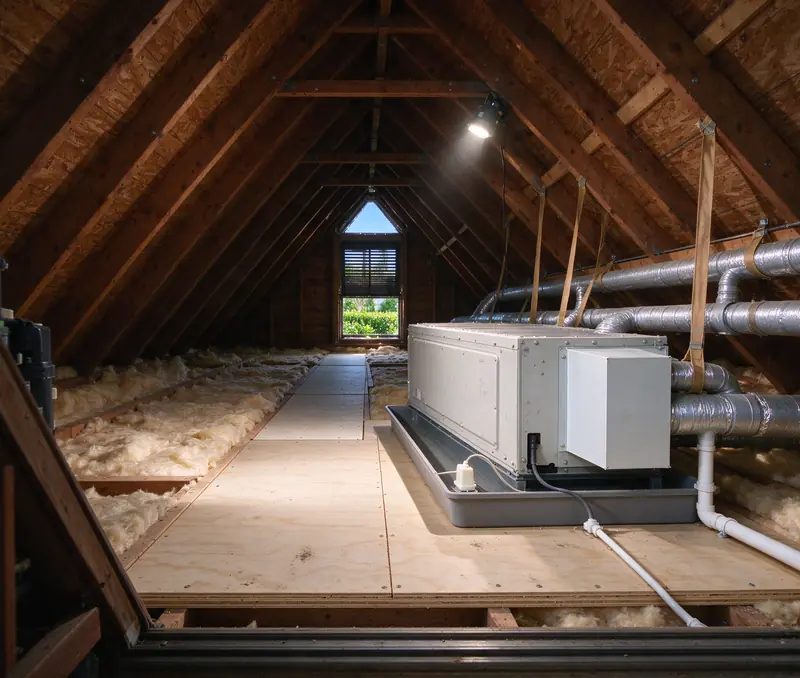
Water in a pan or on a ceiling is a repair call, and the drain should be cleared before the next hot afternoon. Damp-but-cool rooms are a design question that an inspection or a ductwork repair visit can answer with measurements.