Last updated:
The short answer
Warm air in cooling, a system that won't reach the setpoint, short cycling, water near the indoor unit, ice that stays on the outdoor coil, new noises and a sudden jump in the bill all warrant a repair visit. Switch the system off first if you smell burning, see sparks or water near electrical parts, or a breaker trips again.
Key takeaways
- Burning smells, sparks, water near wiring, repeated breaker trips and floodwater mean switch off first.
- One symptom can come from several causes, so a symptom is a starting point, not a diagnosis.
- The safe checks are the thermostat setting, the filter, the breaker position and what you can see.
- Defrost steam, a whoosh from the reversing valve and long runs on hot afternoons are normal.
- The diagnostic visit is its own line, and major parts are priced on their own.
The system stopped, it runs but the air isn’t cold, or it has started making a sound you haven’t heard before. A symptom like that is worth acting on. It rarely tells you which part has failed, though, and guessing costs time and money.
Sweet Olive repairs ducted heat pumps across New Orleans through our heat pump repair service. This guide covers when to switch off first, what common symptoms can point to, what is safe to check yourself and what to tell us when you call.
Switch off first if you notice these
Some signs mean the system shouldn't keep running until it has been checked.
Turn the system off at the thermostat and call
- A burning or hot electrical smell, from the registers, the air handler or the outdoor unit.
- Smoke or sparking at any part of the system.
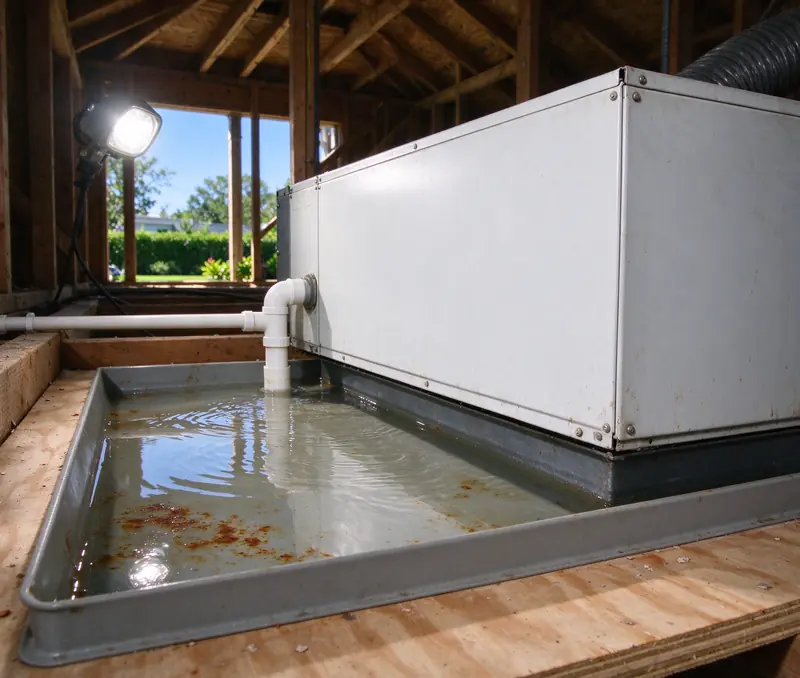
- Water near electrical parts, such as pooling at the base of the air handler near its wiring.
- A breaker that trips again after one reset. Leave it off.
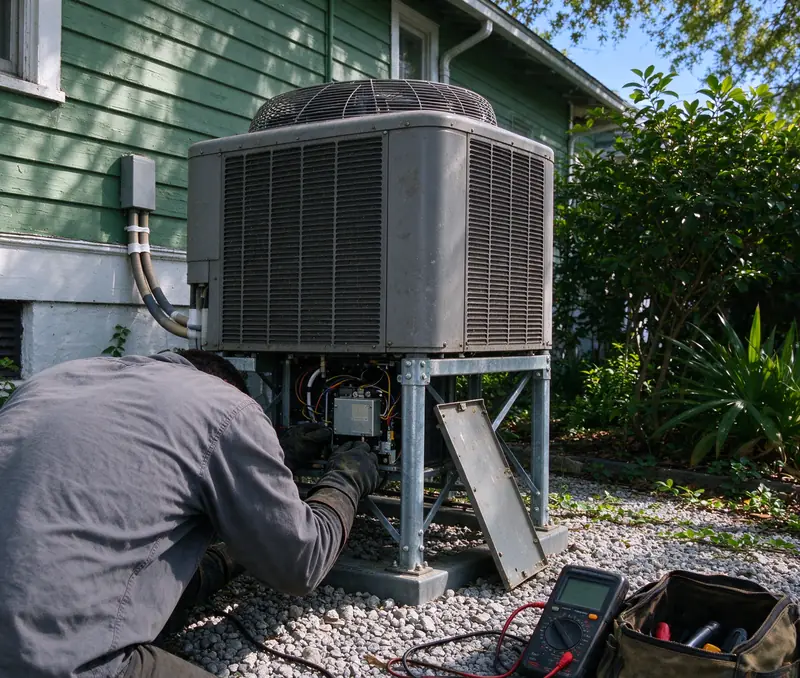
- Floodwater that reached the outdoor unit, the air handler or its wiring.
One reset, not several
Resetting a tripped breaker or a fault again and again can turn a small fault into a large one. Note what tripped and when, and leave it off.
What common symptoms can point to
Each symptom has more than one possible cause. The table lists the likely ones and what is safe for you to check.
| Symptom | What it can point to | Safe to check |
|---|---|---|
| Warm air with the system in cooling | Thermostat setting, a tripped outdoor breaker, a failed capacitor or contactor, low charge from a leak, a dirty coil | The mode and setpoint; whether the outdoor unit’s fan is running; the breaker position |
| Runs constantly, never reaches the setpoint | A clogged filter, a dirty coil, a duct leak, low charge, a system too small for the load | The filter; registers and the return open |
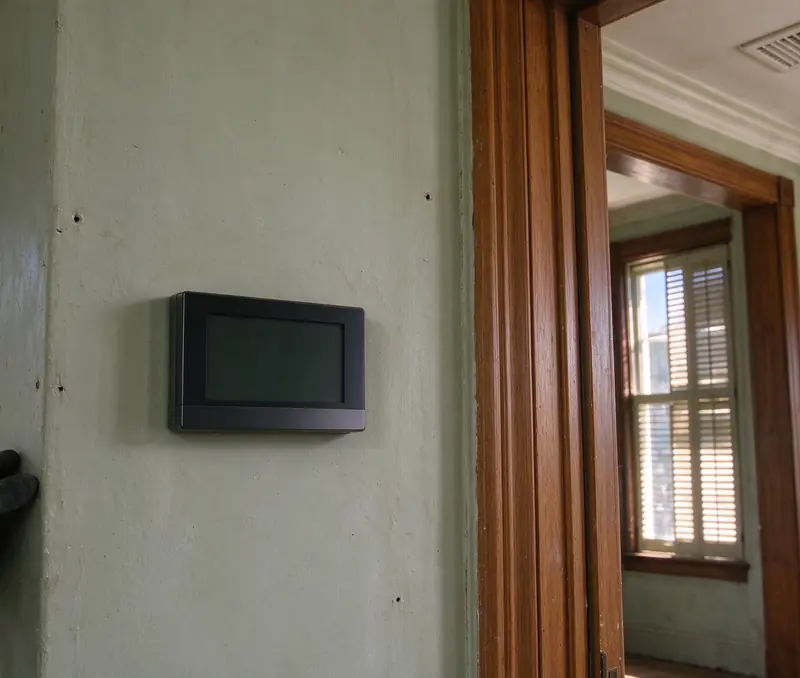
| Short cycling, on and off every few minutes | Oversizing, a thermostat in the wrong spot or set up wrong, low airflow, a fault in the equipment | Whether the thermostat sits near a supply register or in sun |
| Water at the air handler, or the system shut off | A blocked condensate drain, a tripped float switch, a cracked pan | Whether the secondary pan holds water; leave the switch alone |
| Rooms clammy at the setpoint | Short runs, a fan left running between cycles, a duct leak pulling in attic air; see the humidity guide | The fan setting: auto or on |
Cooling-season symptoms, what each can point to, and the safe checks you can make.
- Dark circle, Air handler: on an attic platform, over a secondary drain pan
- Ochre square, Supply runs: dropping to ceiling registers
- Blue diamond, Central return: in the hall ceiling
- Yellow triangle, Jumper duct: from a closed bedroom to the hall
- Open ring, Line set and drain: along the outside wall
- Dark cross, Outdoor unit: on a raised stand, with its disconnect
Why one symptom can have many causes
Warm air from the registers can start at the thermostat, the outdoor unit’s electrical parts, the refrigerant circuit, the coil or the ducts. Those are different parts of the system, and they need very different fixes. We check the controls, the electrical parts, the airflow, the drain and the refrigerant circuit, then tell you what the tests show and what is still uncertain.
| Symptom | What it can point to | Safe to check |
|---|---|---|
| Ice that stays on the outdoor coil for hours | A defrost fault, low airflow, low charge, a blocked or boxed-in unit | Leaves or covers on the unit; don’t chip the ice |
| Aux heat on most of the time in mild weather | Thermostat setup, a missing outdoor lockout, the heat pump not heating | The thermostat mode; whether the outdoor unit runs |
| Grinding, screeching or banging | A motor, bearing or fan problem, a loose part, a compressor fault | Debris in the fan from above, without opening anything |
| A jump in the bill without a weather change | Backup heat running too much, a refrigerant or airflow problem, a duct leak | The thermostat settings and any recent change to them |
| Weak air in some rooms only | A disconnected or crushed duct, a closed damper, no return path from that room | Registers open; doors and furniture off the returns |
Heating-season and year-round symptoms, what each can point to, and the safe checks you can make.
Normal sights and sounds that aren't faults
Some things a heat pump does look alarming the first time and are part of normal operation.
Normal
Part of how a heat pump runs.
- Steam from the outdoor unit on a cold morning, during defrost
- A whoosh when the reversing valve switches
- Long runs on the hottest afternoons
- Water dripping from the drain line outside in summer
- Cooler supply air for a few minutes during defrost
Worth a call
Signs that something has changed.
- Smoke, or a burning smell
- A coil encased in ice that stays
- Rooms drifting above the setpoint while it runs
- Water inside, at the air handler or a ceiling
- Clicking at the outdoor unit with no start
When you aren't sure, note it and ask; a description over the phone often settles it.
Defrost in winter
On damp winter mornings, frost on the outdoor coil and a short defrost cycle with steam are expected. Our cold-weather guide explains what normal winter operation looks like.
Long runs in August
A system sized to the house runs long on the hottest afternoons, and that is when it removes the most moisture. Our sizing guide explains why.
What to note before you call
A clear description shortens the diagnosis and helps us bring the right parts.
Useful to tell us
- When it started, and whether it came on suddenly or slowly.
- The weather at the time: a hot afternoon, a cold morning, after a storm.
- What the thermostat shows: mode, setpoint, room temperature and any code.
- Which rooms are affected, or all of them.
- What you have checked: the filter, the breaker position, the registers.
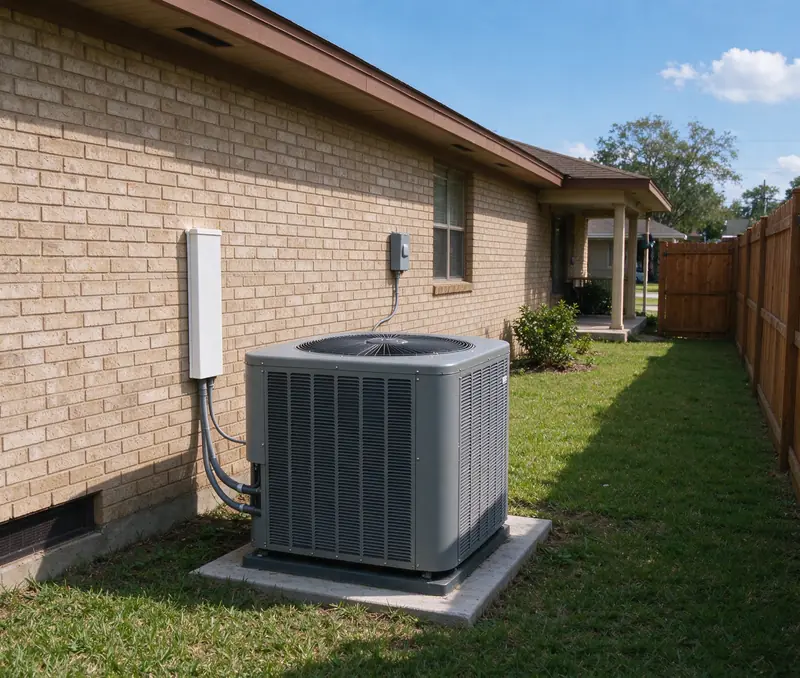
- Photos of the equipment labels, taken without opening any covers; our post on reading an equipment label shows where they are.
- Recent work on the system, the electrical panel or the ducts.
How a repair visit works and is priced
We find the cause first, explain it, and price the fix before any part is ordered.
Sweet Olive's typical range for a residential heat pump repair is $161 to $661. The diagnostic visit is its own line, and a compressor or an indoor coil is priced separately because either changes the cost so much. We set the repair price once we know what failed and write it down before work starts.
When a repair isn't the end of it
A failed compressor, a leaking coil or another major repair on an aging system is the point where we price a replacement beside the repair, so you compare two defined jobs. Our repair or replace guide lays out what to weigh, and the maintenance checklist covers the care that heads off some of these calls.