Last updated:
The short answer
It depends on your electric rate, how much cooling and heating the house needs, the equipment's SEER2 and HSPF2 ratings, how well the ducts deliver the air and how often the heat strip runs. Entergy New Orleans residential customers averaged 13.03 cents per kilowatt-hour in the Energy Information Administration's 2024 utility data; your own bill is the better starting point.
Key takeaways
- Start from the rate and the kilowatt-hours on your own bill, not a citywide figure.
- SEER2 and HSPF2 compare equipment under test conditions; your bill also carries the house, the ducts and your habits.
- The electric heat strip turns each kilowatt-hour into far less heat than the heat pump does in mild weather.
- A fair comparison holds the indoor temperatures and the house the same on both sides.
People ask what a heat pump costs to run expecting a monthly figure. The honest answer is a method: your rate, your house’s loads, the equipment’s ratings and how the air gets delivered. With your own bill in hand, the method gives a far better answer than any citywide number.
Sweet Olive installs and replaces ducted heat pumps across New Orleans, and when we discuss running costs we use your bill and your house, not a promised saving. This guide covers the inputs, the public figures for New Orleans, and how to compare one system with another. The price to install is a separate question, covered in our cost guide.
The inputs that set a running cost
Five things decide the electricity a heat pump uses in a year. Only one of them is on the equipment label.
| Input | Where it comes from | Why it matters |
|---|---|---|
| Your electric rate | Your bill and the Entergy New Orleans tariff for your account | Every kilowatt-hour is priced from it, with fixed and adjustment charges on top |
| The house’s loads | The room-by-room load calculation | A house with more sun, glass and air leaks needs more cooling and heating |
| Equipment ratings | SEER2 for cooling, HSPF2 for heating, from the matched outdoor and indoor pair | How much heat moves per kilowatt-hour under test conditions |
| Delivery | Duct leakage, static pressure and airflow | Air lost in the attic is paid for and never reaches a room |
| Habits and controls | Setpoints, fan setting and the heat strip’s lockout | They decide run time and how often resistance heat runs |
The inputs to a heat pump's running cost, where each comes from, and why it matters.
Why the house matters more than the box
Two identical systems in two houses use different amounts of electricity because the houses ask for different amounts of cooling. The load calculation in our sizing guide is the same input that sets the size, which is why we start there for running cost too.

What New Orleans households use and pay
Federal utility data gives a sense of scale. It describes averages, not your house.
13.03¢
Average revenue per kilowatt-hour from Entergy New Orleans residential customers, Energy Information Administration 2024 utility data
That average folds in every charge on the bill. Your own rate depends on your account, the tariff and the month, so we use the figures on your bill.
| Figure | Entergy New Orleans residential | Louisiana residential | United States residential |
|---|---|---|---|
| Average price per kilowatt-hour | 13.03 cents | 11.73 cents | 16.48 cents |
| Average use per customer | About 1,040 kWh a month, from 2,353,677 MWh sold to 188,178 customers | 1,202 kWh a month | 863 kWh a month |
Residential electricity figures from the Energy Information Administration's 2024 sales data (forms EIA-861), all uses combined, not heating and cooling alone.
What the averages tell you
In these figures, Louisiana households use more electricity than the national average, and Entergy New Orleans customers sit between the two. The averages include lighting, appliances, water heating and everything else, so they can’t tell you what the heat pump alone costs. The kilowatt-hours on your own bills, month by month, show how much of your use rises and falls with the weather, and our cost estimator covers the separate question of the installed price.
Reading SEER2 and HSPF2 without turning them into promises
The ratings are a fair way to compare equipment, and a poor way to predict a bill.
SEER2: cooling
Btu of cooling delivered per watt-hour over a rated cooling season.
- A 16 SEER2 system delivers 16,000 Btu of cooling per kilowatt-hour under the test conditions
- Higher means less electricity for the same delivered cooling
- Energy Smart rebate tiers start at 15.2
HSPF2: heating
Btu of heat delivered per watt-hour over a rated heating season.
- An HSPF2 of 7.5 averages 7,500 Btu per kilowatt-hour across the rating's season
- The rating includes some backup heat in its test
- Energy Smart rebate tiers start at 7.1
Use the ratings to compare two systems for the same house; use your bill to estimate what either one costs.
What the test doesn't see
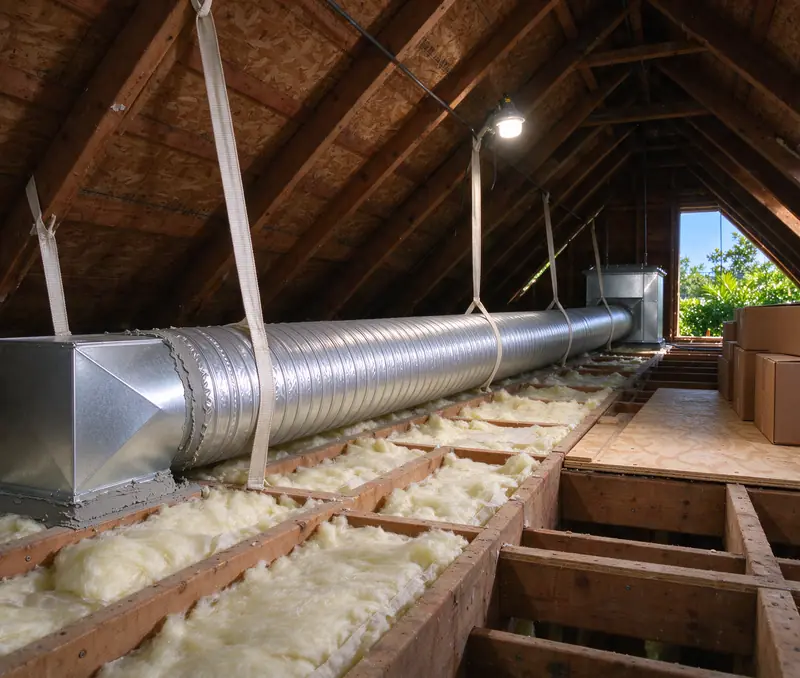
The rating test uses set conditions and a short, ideal duct connection. In a house, leaky ducts in a hot attic, high static pressure, an oversized unit and a heat strip with no lockout all add use the rating never measured. That is why we test the ducts and record airflow at startup; the ductwork guide explains the tests, and the rebate guide lists the ratings each Energy Smart tier asks for.
The heat strip: winter's wild card
On a heat pump system, most of the winter bill risk comes from the backup heat, not the heat pump.
Resistance heat versus moving heat
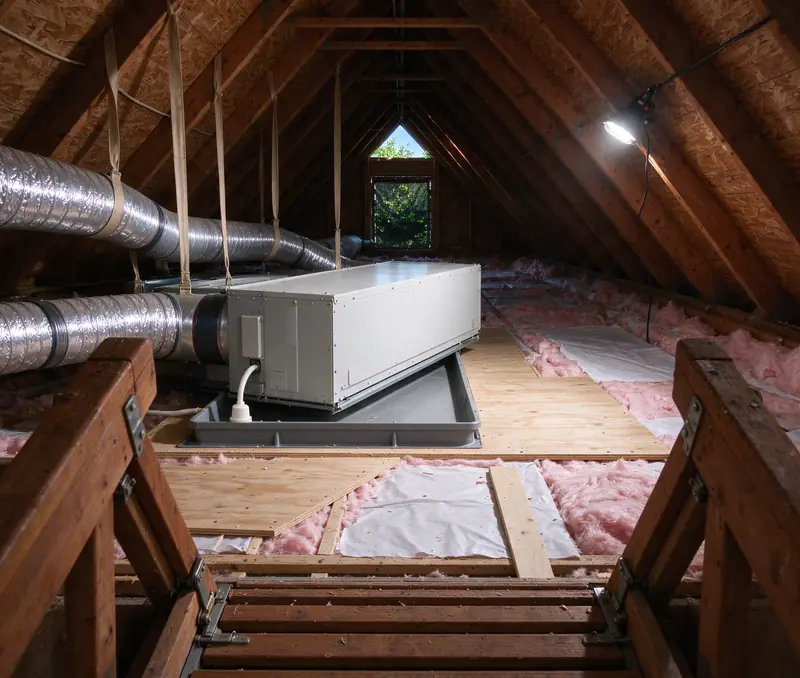
An electric heat strip turns each kilowatt-hour into 3,412 Btu of heat, no more. A heat pump in mild weather moves more heat than that for the same kilowatt-hour, because it collects heat from outdoor air rather than making it. When the strip runs on a mild morning because the thermostat called for a large jump, the house pays resistance-heat prices for heat the heat pump could have supplied.
What keeps the strip in its place
An outdoor lockout where the equipment supports it, a strip sized to the heating load rather than the largest the cabinet takes, and setbacks small enough for the heat pump to recover. Our cold-weather guide explains defrost and the balance point.
Comparing against gas or an old system
A comparison is only fair when both sides heat and cool the same house to the same temperatures.
What to bring
- Twelve months of electric bills, with the kilowatt-hours, not just the totals.
- Twelve months of gas bills, if gas heats the house now, from your gas utility.
- Photos of the equipment labels, indoor and outdoor, so we know the age and ratings.
- Your thermostat habits, such as setpoints, setbacks and the fan setting.
- Any changes planned, such as insulation, windows or an addition.
When we compare an all-electric heat pump with a gas furnace, or a new system with an old one, we keep the assumptions in view and use your rates. A published rating isn’t your bill, and a lower estimate isn’t a promised saving. Our heat pump and gas furnace guide covers the heating choice, and conversion covers the work.