Last updated:
A building with several heat pumps needs care you can track: which unit got what, when, and what it read. Without that, a weak part shows up as a warm dining room on a full Saturday, and nobody knows which unit on the roof serves it.
Sweet Olive maintains ducted air-source heat pumps in restaurants, shops, offices and small multi-tenant buildings across New Orleans. We start from your equipment list and how the building runs, agree what each visit covers, and leave a record for every unit.
For a home system, see residential maintenance. A visit that turns up a fault leads to a separately priced commercial repair, never an open-ended add-on to the visit.
A typical Lower Garden District maintenance visit
Three units, kitchen grease in the courtyard and a lunch rush at eleven: a spring visit planned around a restaurant's day.
- Location
- Lower Garden District, New Orleans
- Property
- Corner restaurant in a two-story building: dining room, bar and upstairs office
- System
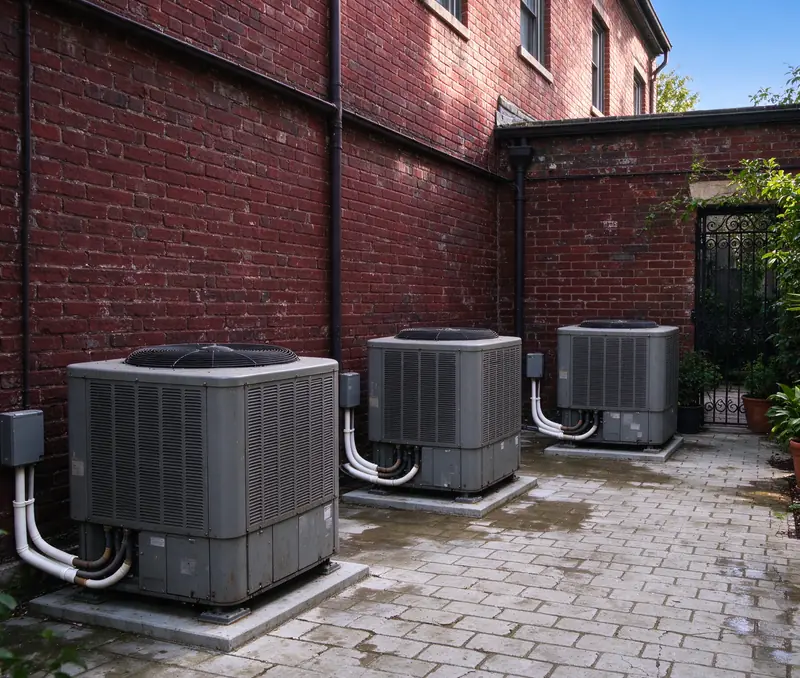
- Three split heat pumps, outdoor units in the rear courtyard
- Plan
- Spring visit of a two-visit year
- Filters
- Three filter sizes recorded and changed
- Records
- Each unit tagged to the room it serves
- Project price
- $645
- Duration
- 4 hours on site, before lunch service
The setting
Three units nobody can tell apart
A corner restaurant on Magazine Street runs three split heat pumps: one for the dining room, one for the bar and one for the upstairs office. The outdoor units sit in a narrow rear courtyard near the kitchen exhaust, and the dining room and bar air handlers sit above the ceiling, reached by ladder through access panels. The manager wants the cooling season to start without a dead system on a full Saturday, and nobody knows which outdoor unit serves which room.
The plan
Two visits a year, spring the longer one
We set the plan as two visits: one in spring before the long cooling season, one in fall before the first cold snap. A single yearly visit is the alternative we lay out, but grease from the kitchen loads the filters and the courtyard coils faster than one visit keeps up with. Each unit gets a tag naming the room it serves, so this visit, the next one and any repair start from the same record.
The visit
Four hours, finished before the doors open
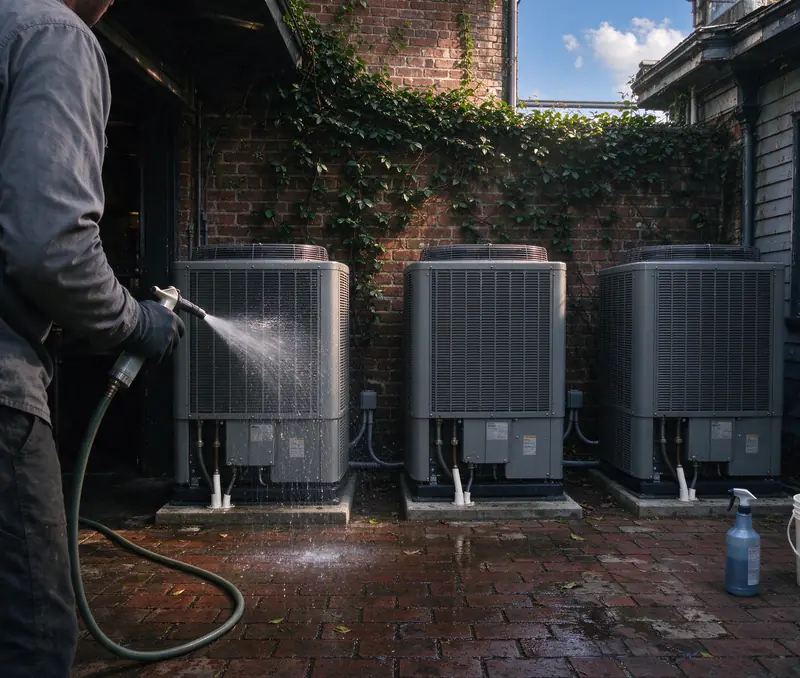
The visit runs four hours in the morning and ends before lunch service. We change the three filters and record their sizes, clean the courtyard coils with a degreasing coil cleaner and rinse them from the inside out, flush the condensate lines and clear the traps. Then we test both float switches, tighten electrical connections, read the capacitors and the compressor and fan amp draws, and check refrigerant temperatures against the manufacturer's charging chart.
The record
One page per unit
The manager gets one page for each unit: its tag, filter size, readings and anything we recommend. When a part reads outside its rating, such as a weak run capacitor, it goes on that page as a separately priced repair to approve, not a swap inside the visit. The fall visit opens by comparing its readings with these.
When a maintenance plan pays its way
Planned visits suit buildings where a breakdown costs more than the visit does.
- Several units and several contacts. Each unit needs its own history, or the record means little.
- Grease, flour, dust or hair in the air. Kitchens, bakeries and salons load filters and coils faster.
- Long hours. A unit running twelve hours a day wears faster than one running four.
- A lease or a landlord asking for proof. Some leases ask the tenant to keep maintenance records.
- A system you just installed. Its startup readings are the baseline; maintenance keeps comparing against them.
How often to plan a visit
Two visits a year suit most heat pumps here: one in spring before the long cooling season, and one in fall before heating mode does its first real work. Kitchens and dusty spaces may need filters changed in between. We set the interval from the equipment and the space, and write it into the plan. Our maintenance checklist shows what each visit covers in detail.
How your equipment list and hours shape the visit
The more we know before the first visit, the more of that visit goes to the equipment.
| What we need | Why it matters |
|---|---|
| Equipment list with model and serial numbers | Sets the parts, filter sizes and the manufacturer’s maintenance steps |
| Which unit serves which space | So every reading and finding lands on the right unit |
| Hours and busy periods | The visit runs while the space can spare its cooling |
| Roof, closet and ceiling access | Ladders, hatches, keys and who holds them |
| Past service records | Earlier readings to compare against |
| Who receives the findings | Tenant, manager or owner, so repairs reach the person who approves them |
What we ask for before the first visit, and why each item matters.
Tagging the units
Where unit labels are faded or missing, we tag each outdoor unit and air handler with the space it serves on the first visit. It is a small step, and it makes every later repair quicker to start, because nobody has to trace a line set across a roof again.
What the visit checks, and why the readings matter
Clean filters and coils matter, but the numbers are what show a unit losing ground before the room feels it.
Cleaning and drainage
Filters are changed and their sizes recorded. Outdoor coils are cleaned where dirt or grease has built up, rinsed from the inside out, and indoor coils are inspected through the panels we can open. Drains are flushed, traps cleared and float switches tested, because a blocked drain above a ceiling is the repair nobody wants. We don’t add refrigerant as routine: low charge means a leak to find, priced as a repair.
Readings season to season
Supply air temperature, the temperature split across the coil, static pressure and amp draws, compared with the last visit, show a dirty coil, a weakening motor or a slow leak early. SEER2 and HSPF2 ratings describe new equipment under test conditions; dirty coils and low airflow pull real performance below them and raise electricity use. Our operating cost guide explains how that reaches the power bill.
54.3°F
Average daily temperature in January at the New Orleans airport, from National Weather Service climate normals
Heating mode runs only part of the year here, so the fall visit tests it before the first cold morning instead of after.
Defrost, backup heat and cold mornings
In heat mode the outdoor coil can frost, and the unit reverses briefly to clear it while the heat strip warms the supply air. The fall visit confirms the reversing valve, the defrost cycle and the heat strip, so the first cold snap doesn’t find a system blowing cool air into a shop. Our cold weather guide covers how heat pumps behave on those mornings.
Cycling and humidity
Short, frequent cycles leave a dining room or office cool and clammy. On the spring visit we look at how each unit cycles and whether its airflow and controls suit the moisture load. Variable-speed units should modulate down and run longer, so we check that their settings let them. Our humidity guide goes deeper.
Where maintenance ends and repair begins
A routine visit can find a fault, but it isn't an open repair allowance.
Maintenance visit
Planned care, priced up front for each unit.
- Cleaning, checks and readings
- Findings written on the unit's record
- Done within the agreed scope
Repair
A fault to fix, priced on its own.
- Diagnosis of a specific problem
- A written repair price for approval
- Parts and work outside the visit
Keeping the two apart means the visit price stays what you agreed, and every repair has a finding and an approval behind it.
What happens when we find a fault
A visit can turn up a weak capacitor, a refrigerant leak or a failing fan motor. We note it on that unit’s record with the readings that show it, explain what it means, and price it as a separate commercial repair for whoever approves the work. If a unit’s history points toward replacement, we say so and price it apart. Our warning signs guide lists the symptoms worth calling about between visits.
How we price commercial maintenance
The plan is priced for your building, before the first visit.
We price commercial heat pump work per project, from the equipment, the building and the access the work needs. We set the visit price from the number of units, how we reach them and what each visit covers, and write it into your plan before the first visit.
What moves a maintenance price
- Number of units. Each one gets its own checks and its own record.
- Access. A roof hatch or air handlers above a ceiling take longer than a side yard and a closet.
- Coil condition. Grease or heavy dirt means a degreasing clean and more time.
- Filters. How many, what sizes and how often they change.
- Visits a year. One, two, or more for heavy-use spaces.
Records that pay off later
Keep the records with the unit tags. They shorten repairs, help a landlord or a new tenant see what they are taking on, and give a replacement decision real numbers to work from. If you are adding equipment, our commercial installation page shows how a new system’s startup readings start its record.