Last updated:
The short answer
They can, if they pass the tests. We measure leakage and static pressure, check each run's size against the airflow its room needs, look for a return path from every closed room, and inspect for crushed, torn or uninsulated flex. Ducts that pass are kept. Ducts that fail are sealed, resized or replaced before new equipment goes on them.
Key takeaways
- Age and appearance don't decide reuse; leakage, static pressure and airflow do.
- Return-side leaks in a hot attic add moisture and load the system was never sized for.
- A heat pump's heating air is milder than a furnace's, so register placement and insulation matter more.
- A bigger unit on restricted ducts raises static pressure; the fix is in the ducts.
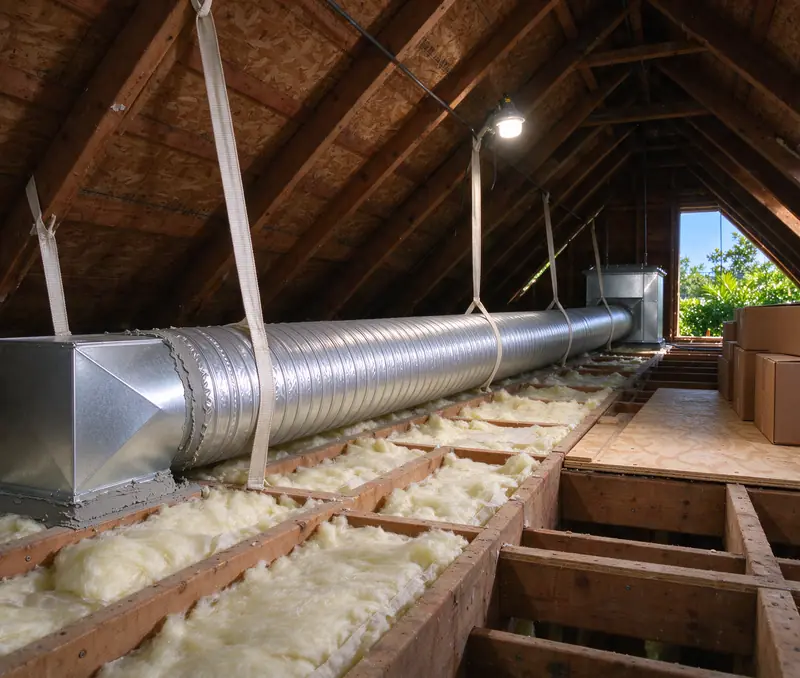
A new heat pump is only as good as the ducts it pushes air through. The equipment can be sized perfectly and still leave a bedroom warm if the run to it is crushed, or the hall damp if the return pulls in attic air.
Sweet Olive installs heat pumps and repairs ductwork across New Orleans, and we test existing ducts before deciding to reuse them. Our sizing guide lists those tests in brief. This guide explains what each one measures, what a failing result looks like, and what fixing it involves.
What each duct test measures
Five measurements decide whether a duct system can carry a new heat pump's air.
| Test | How it is measured | A failing result | Usual fix |
|---|---|---|---|
| Leakage | A calibrated fan pressurizes the sealed duct system and reads the air it loses | Air lost in the attic or wall cavities rather than delivered | Mastic at connections and seams, new collars, repaired boots |
| Total external static pressure | A manometer reads pressure on both sides of the blower | Above the limit in the air handler’s blower table | Larger return, wider filter grille, resized trunk |
| Airflow to each room | Run sizes compared with the airflow each room load calls for (ACCA Manual D) | A room getting far less than its share | Resized or added run, rebalanced branches |
| Return path | Pressure in each room with the door closed | A bedroom pushed positive, with less air coming in | Jumper duct or transfer grille |
| Condition | Inspection of flex, collars, insulation and supports | Crushed, sagging, torn or uninsulated runs | Replace the damaged runs |
The duct tests we run before reuse, how each is measured, what a failing result looks like and the usual fix.
Why we test instead of looking
A duct system can look tidy and leak at every boot hidden under insulation, or look tired and test well. The readings tell us what the new equipment will face. They also go on the startup record, so later visits can compare.
Supply leaks and return leaks do different damage
Both waste air you pay for. The return side brings something in with it.
A leak on the supply side
Cooled or heated air escapes before it reaches a room.
- Cools the attic instead of the bedroom
- The room it feeds runs warm
- The system runs longer to make up the loss
A leak on the return side
The system draws in air from wherever the leak sits.
- Hot, damp attic air enters the coil
- Adds moisture and heat the system wasn't sized for
- Can pull in dust and insulation fibres
Find and seal return leaks first; they add load as well as losing it.

Why the house pressure matters
When supply air goes into a closed bedroom with no way back, the room pushes air out through gaps and the hall runs slightly negative, drawing humid outdoor air in. That is a moisture problem as much as a comfort one. Our humidity guide covers what damp air does to comfort.
What a heat pump asks of ducts that an old system didn't
Ducts that served an air conditioner or a furnace may need changes for a heat pump.
| Ducts built for | What changes with a heat pump | What we check |
|---|---|---|
| A central air conditioner | Similar cooling airflow; the ducts now carry heating air too | Insulation and register placement for winter |
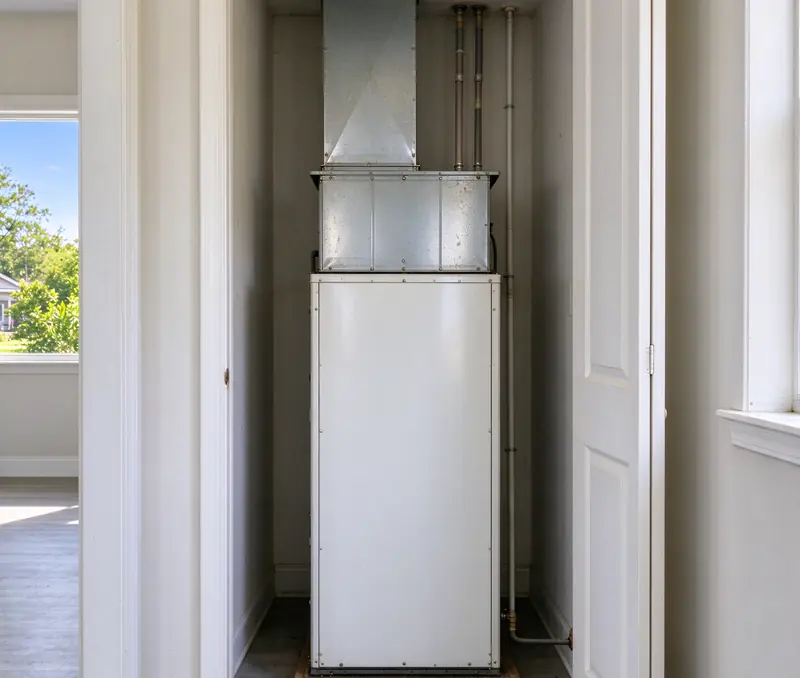
| A gas furnace | Heating air is milder, and the coil and blower need cooling airflow all summer | Return size, static pressure and the coil cabinet fit |
| Window units, no ducts | Everything is new | A full layout from the room loads |
How a heat pump's needs differ from the system the ducts were built for.
Milder supply air in winter
A gas furnace sends out hot air in short bursts; a heat pump sends out warm air for longer. A register that blows across a sofa can feel cool on a heat pump even when the room is at its setpoint. Placement, throw and duct insulation in an unconditioned attic matter more. Our heat pump and gas furnace guide compares the two in full.

Seal, resize or replace
Each finding has its own fix. Replacement is for ducts that can't be brought up to what the house needs.
| What the tests find | What fits |
|---|---|
| Leaks at connections, boots and collars on sound runs | Seal with mastic and reconnect |
| One or two rooms short of air | Resize or add those runs |
| High static pressure from a small return | Add or enlarge the return |
| Closed bedrooms with no way back | Jumper ducts or transfer grilles |
| Crushed or torn flex in places | Replace those runs |
| Undersized trunk, widespread damage, or a layout that can’t reach new rooms | A new duct system laid out from the room loads |
Where the line usually falls between repairing and replacing a duct system.
Where the ducts sit changes the job
In an attic, ducts face summer heat, so sealing and insulation carry more weight. Under a raised floor, they face damp air and water. Inside conditioned space, leaks matter less, and the City of New Orleans doesn’t require duct testing on new construction when the air handler and every duct sit there. The ductwork repair page covers the work, and the components guide shows how the ducts connect to the rest.
What your estimate says about the ducts
Duct work is often the biggest swing in a price, so the estimate spells it out.
- The test results behind the decision: leakage and static pressure.
- What we keep, what we reseal and what is new, run by run.
- Returns and jumper ducts added, with their locations.
- Insulation on new and repaired runs.
- The airflow target that startup will measure, as the installation process guide describes.
If the ducts can’t carry the airflow the load calls for, a bigger unit won’t fix it. Our cost guide shows how duct work moves a price within our range.